Castor Oil Based Drug Delivery Systems

Levosulpiride (LSP) is a hydrophobic benzamide derivative used in the treatment of schizophrenia. In order to enhance the drug absorption and bioavailability, castor-oil-800067scientists from India did a research to formulate castor oil based globule.

Results showed that at a certain ratio of castor oil, polyethylene glycol and Tween 20, the formulation had shown uniform globule size, no interactions of LSP with Self Nano Emulsifying Drug Delivery System components and a higher pharmacokinetic parameter than that of commercial preparation.
Source

Ricinoleic Acid Based Electrospun Fibres

Ricinoleic acid, derived from castor oil has an anti-inflammatory action following topical application. However ricinoleic acid goes rancid when it is exposed to oxygen.  ricinoleic-acid-61245Hence scientists from Egypt performed an experiment to encapsulate ricinoleic acid into ethyl cellulose (EC) electrospun fibres.  Electrospinning parameters of EC were optimized to obtain bead-free fibres.
RA at different concentrations was encapsulated into EC fibres. Release profile was reported and encapsulation was demonstrated via morphological analysis.

More

New Catalyst for Biodiesel Production from Castor Oil

Scientists from Brazil performed an experiment to optimize and investigate the biodiesel production from castor oil using microwave-assisted hybrid transesterfication process under various conditions such as microwave power, treatment time, ethanol:oil ratio and catalyst concentration (KOH).

Results showed that under optimal conditions the predicted biodiesel production was found to be 95% with a desirability value of 0.998.

More

Modification of Asphalt using Castor Oil Based Polyurethane

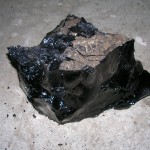
Scientists from India performed an experiment where asphalt which is commonly used for road pavement was modified using castor oil based polyurethane to improve the properties of asphalt such as resistance to permanent deformation and to refined_bitumenreduce the fatigue.

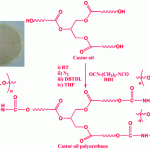
Polyurethane pre-polymer (PUP) was prepared by using castor oil and toluene diisocyanate (TDI). Asphalt modification was done using castor oil (C.O.) and PUP. Results showed that polymer modified asphalt showed improvement in properties such as hardness and softening point thereby making the pavement application smooth.

More

New Bio-based Building Block for Chemical Industry

Scientists from Colombia performed an experiment where a kinetic model was developed for high CO2 pressure carbonation of epoxidized castor oil to be used in the castor oil polyurethaneproduction of thermoset polymers and non-isocyanate polyurethanes.


Carbonated castor oil was produced from the epoxidized oil at 100–130 °C and a constant pressure of CO2 (0.5 MPa). Because the polyfunctional character of the product, it could find applications as monomer and as a synthetic building block for other bio-based chemicals.

More

Castor Oil Derived Acrylic Copolymers for Surface Coating Applications

Scientists from India performed an experiment where they invented castor oil derived acrylic copolymers which can be used for surface coating applications.Homepagecarroussel-research1

Acrylic polyols containing hydroxy functional groups derived from castor oil were synthesized in the presence of an initiator. The synthesized resins when cured with suitable polyisocyanates or amino resin cross-linkers provided tough, glossy and chemical & weather resistant coatings.

More

New Castor Oil Based Lubricant Basestocks

Scientists from India performed an experiment to synthesize castor oil based acrylated derivatives to be used as potential lubricant basestocks. The acylated imagesderivatives of castor oil, castor oil fatty acid methyl and 2-ethylhexyl esters were synthesized using different anhydrides in about 90–95% yield. All the products were structurally characterized using NMR and IR spectral data.
Results showed that castor oil could have use in hydraulic and metal working fluids and other industrial fluids with their wide range of properties.

Source

New Castor Oil/PCL Based Bio-PU Foam

Scientists from Korea performed an experiment to fabricate castor oil/PCL based bio-polyurethane foam reinforced with nano cellulose. PU foam based on biomaterials castor oil polyurethanewas investigated to replace traditional petroleum-based polyol. Polyols were synthesized from castor oil (CO) and polycaprolactone (PCL). In addition, the effects of the nanocellulose on the thermal and mechanical properties of CO-based PU foam were investigated.

Results showed that addition of the nanocellulose could be an effective way to improve the mechanical and thermal properties of PU foams.

More

New Castor Oil Based Curing Agent

Castor oil-derived decanediamide, as a novel flexible epoxy curing agent, was synthesized by scientists from China through the method of esterization with methanol and ammonolysis with ammonia. The chemical structure and thermal properties imagesof this novel curing agent were confirmed by FTIR.

The results showed that the prepared decanediamide had a high yield of 85.4%, and the epoxy resin cured by the decanediamide revealed a slight decrease in the mechanical properties and thermal stability, and a longer pot life at high temperature compared with that of a conventional epoxy curing agent.

More