Castor Seed Price Weekly Report: November 10-14, 2014

The weekly report of castor seed price at NCDEX from CastorOil.in

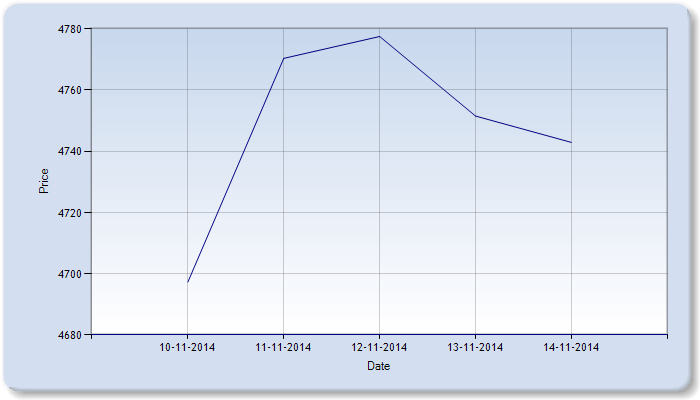
There was an instability in the price of castor seed during the week. For more details, check out the table and the graphical data.

Price Date
Rupees per Quintal
10 Nov 4697.30
11 Nov 4734.50
12 Nov 4778.80
13 Nov 4751.45
14 Nov 4732.75

Nov 10-14


Source

100% Biobased Polymer as Food Contact Substance

Evonik, German-based specialty chemicals company, has received approval for its foodmq1 contact substance ‘VESTAMID Terra DS16 natural’. VESTAMID Terra DS16 is a biobased polymer belonging to the family of PA1010 polyamides.

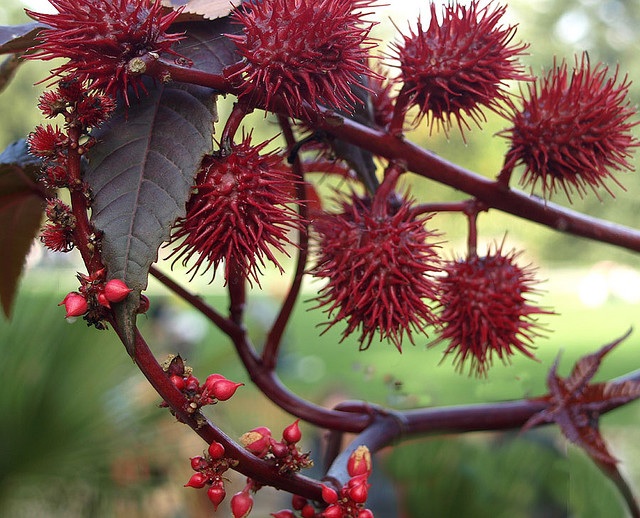
The polymer is based on renewable feedstock. The starting material is the castor bean and its oil derivatives. VESTAMID Terra DS is based on polyamide 1010, which is the polycondensation product of 1, 10-decamethylene diamine (D) and 1, 10-decanedoic diacid (sebacic acid – S). Both of these are derived from castor oil, which means that Terra DS is 100% Bio based.

Another polymer named Terra HS, based on polyamide 610, contains polycondensation product of 1, 6-hexamethylene diamine (H) and 1, 10-decanedoic diacid (sebacic acid – S) and is 63% biobased. Terra HS is already being approved in the EU and USA for food contact with non-alcoholic food materials.

Source

Learn more about Polyamides 

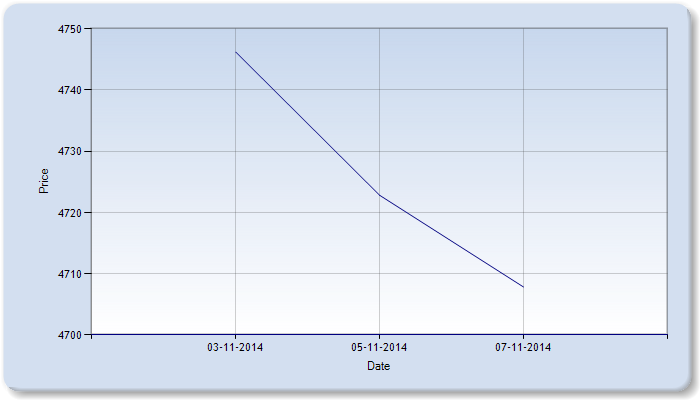
Castor Seed Price Weekly Report:November 03-07, 2014

CastorOil.in brings you the weekly report of castor seed price at NCDEX.

A steady fall in the price of castor seed is noticed during the week. The reason for this decline may be selling pressure from bear operators.

Check out the table and the graphical data.

Price Date
Rupees per Quintal
03 Nov 4746.15
05 Nov 4722.8
07 Nov 4707.85

 
castor seed price weekly report
Source

Castor Seed Price Weekly Report: October 27- 31, 2014

The price of castor seed at NCDEX had been increasing constantly.

The castor seed was being sold at Rs. 4613 per quintal earlier in the week. At the end of the week the price shot upto Rs. 4812 per quintal.

Price Date Price  per quintal
31 Oct 2014 4812.5
30 Oct 2014 4675
29 Oct 2014 4625
28 Oct 2014 4613

castor seed price weekly report

Source

Study of the Mechanical, Thermal Properties and Flame Retardancy of Rigid Polyurethane Foams Prepared from Modified Castor-Oil-Based Polyols

A team of researchers from China conducted study on mechanical, thermal properties and flame retardancy of rigid polyurethane foams (PUF) prepared from modified castor oil (MCOHomepagecarroussel-research1) based polyols. The polyurethane foam was prepared in two stages. The first stage is the conversion of castor oil into glycerides by alcoholysis with glycerol and pentaerythritol. Next stage is the synthesis of polyester polyols by condensation alcoholysis of castor oil and phthalic anhydride. Results from various analyses showed that components of the MCOs and commercial polyester polyol PS-3152 are similar in their foaming behaviour. Results from analyses like mechanical testing, flame retardancy testing, thermogravimetric analysis and cone calorimetry showed that PUF from modified Castor oil based polyols had a better mechanical properties and thermal conductivities than PS-3152 based Polyurethanes. High thermal stability is exhibited by MCO based PUFs, during pyrolysis.

It is also found that addition of ammonium pyrophosphate decreased their heat release rate, total heat release and mass loss, thereby having synergistic effect with phthalic anhydride polyester polyols. All of these unique properties of MCO-modified rigid PUFs were correlated to the structures of these PUFs.

These findings may lead to the development of a new type of polyurethane foam using castor oil.

Read More from http://www.sciencedirect.com/science/article/pii/S0926669014002817

For more about Castor oil Polyurethanes click here

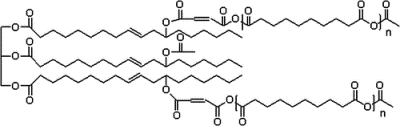
Castor Oil-Sebacic Acid Polyanhydrides for Controlled Release of Drugs

Researchers from the Indian Institute of Science, Bangalore, India, have synthesised aie-2014-00679u_0007 family of high molecular weight castor oil based biodegradable polyanhydrides by a catalyst-free melt-condensation reaction between prepolymers of castor oil and sebacic acid. Sebacic acid is found to increase the crystallinity of the polymer. Water wettability and ductility decreased while strength of the polymer sharply increased with increase in SA content. Invitro hydrolytic degradation studies indicated surface-eroding behaviour. The degradation products also found to have minimal cytotoxic effects. Thus, a CO-SA polyanhydrides can be characterized for controlled release of drugs, by modulation of physical, mechanical and degradation kinetics.

Source

Polyurethane–Organoclay Nanocomposites Based on Castor Oil Polyols

Researchers from University of Technology, Baghdad, have synthesized castor oil-based polyurethanes–organoclay (COPUs-Cloisite 30B) nanocomposites by mixing polypropylene glycol polyol and dehydrated castor oil (15 %), with C30B nanofillers at different weight percentages. Various analyses such as OLYMPUS DIGITAL CAMERAFourier Transform Infrared Spectroscopy, Fourier scanning Electron Microscopy, Scanning Electron Microscopy and X-ray diffraction were performed to evaluate the physico-chemical properties of COPUs-Cloisite 30B. Thermal stability and tensile strength were found to improve upto ~30 C and ~240% respectively, with 5 wt% of C30B . These improved properties allow it to be used in coatings, adhesives and automotives.

Source

Read more about castoroil-based polyurethanes

SGB’s New Hybrid of Jatropha with Shorter Maturation Period

JatrophaSGB Inc, San Diego, has successfully developed a Jatropha hybrid, which has rapid time of maturity and high yielding capacity. The major barrier, concerned with Jatropha is its long time of maturation of about 5 years. The latest generation hybrids have been reduced to one to two years, which is remarkable.

SGB conducted pre-commercial trials with its top 10 hybrids, and the best performing hybrid being recognised, gave an equivalent of 300 gallons of oil per acre in year one, with a corresponding protein production of 0.6 metric tons which is 30% higher than that of yield from soy. The protein is of high quality and contains essential amino acids, comparable to soybean.

The underlying reason for early failures of Jatropha:
• Insufficient germplasm diversity that obstruct effective breeding and improvement of Jatropha,
• Lack of understanding and/ or implementation of the agronomic practices to unlock full potential of Jatropha

Finally, SGB is done with its necessary trials on this super breed, and is ready to commercialise. An investment of $40 million and 7 years of research has resulted in a viable alternative to soybean and palm as a sustainable source of oil and protein.
Source

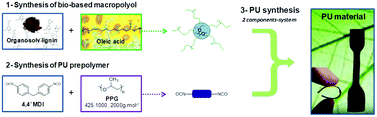
Polyols Based on Organosolv Lignin and Fatty Acids

Scientists from University of Strasbourg, France, published results of their recent research on Bio based building blocks for segmented Polyurethanes. A macropolyol was prepared by combining two different biomolecules- lignin and oleic acid, from biomass. NMR and FT-IR analyses are performed to determine the chemical structure of the lignic- fatty acid based polyol. Polyurethanes preolymers are synthesised from 4,4′-methylenebis(phenyl isocyanate) and poly(propylene)glycol of different molecular weights (PPG – 425, 1000 and 2000 g mol−1. ).

On varying the reaction parameters, in the presence of lignin- fattyacid based macropolyol, different PU macromolecular architectures were obtained. The chemical structure of the lignin- based polyurethane was analysed by FT-IR, and the properties of polymers by DSC, TGA, DMTA, and tensile test experiments. Thus obtained new polymers is found to posses advanced properties and may serve as an optimal alternative to conventional polyurethanes. Full Article

Want to know about Castor oil based Polyurethanes, click the link below:

http://www.castoroil.in/application/castoroilbasedpolyurethanes.html

View blog posts on Castor oil Polyurethanes