A team of researchers from China conducted study on mechanical, thermal properties and flame retardancy of rigid polyurethane foams (PUF) prepared from modified castor oil (MCO ) based polyols. The polyurethane foam was prepared in two stages. The first stage is the conversion of castor oil into glycerides by alcoholysis with glycerol and pentaerythritol. Next stage is the synthesis of polyester polyols by condensation alcoholysis of castor oil and phthalic anhydride. Results from various analyses showed that components of the MCOs and commercial polyester polyol PS-3152 are similar in their foaming behaviour. Results from analyses like mechanical testing, flame retardancy testing, thermogravimetric analysis and cone calorimetry showed that PUF from modified Castor oil based polyols had a better mechanical properties and thermal conductivities than PS-3152 based Polyurethanes. High thermal stability is exhibited by MCO based PUFs, during pyrolysis.
It is also found that addition of ammonium pyrophosphate decreased their heat release rate, total heat release and mass loss, thereby having synergistic effect with phthalic anhydride polyester polyols. All of these unique properties of MCO-modified rigid PUFs were correlated to the structures of these PUFs.
These findings may lead to the development of a new type of polyurethane foam using castor oil.
Read More from http://www.sciencedirect.com/science/article/pii/S0926669014002817
For more about Castor oil Polyurethanes click here
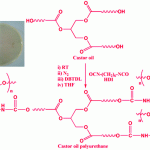 hoxysilane functional intermediate polyurethane prepolymers obtained from castor oil and polyethylene glycol.
 Scientists from India conducted an experiment to analyze the suitable source needed to manufacture UV-curable polyurethane dispersions for coating applications. They synthesized a series of novel waterborne UV-curable polyurethane dispersions from castor oil, Isophorone diisocyanate (IPDI), Dimethylolpropionic Acid (DMPA)and Hydroxyethylmethacrylate (HEMA) by acetone process.
 ilica hybrid materials with chemically bonded polymer matrix and silica nanoparticles. The formation of the cross-linking structures in the polyurethane system was confirmed by FTIR.
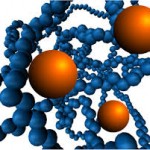 Researchers developed bio-based polyurethane (BPU) using a castor oil/poly (ε-caprolactone) hybrid polyols and hydrophobic BPU ultrafine fibres containing modified silica (m-silica) by electrospinning process. The rheological analysis of the network structure between the BPU and m-silica showed improved mechanical properties and thermal stability. The average fibre diameter of the hybrid ultrafine fibres decreased with increasing m-silica content. Moreover, the m-silica nanoparticle provided an effective surface wettability to BPU ultrafine fibres, thus making it a hydrophobic molecule. All these improved properties makes BPU/m-silica ultrafine fibres, a better replacement for petroleum-based polyurethane membrane, thus allowing its application in the field of bio filters, eco-friendly textiles, and biomedical engineering.