Global Castor Oil and Derivatives Market Expected to Increase by 2020

Castor oil and derivatives market has been growing at a good pace over the past few years on account of growing demand for bio-degradable products.

Recent market study has shown that increasing application scope of castor oil and derivatives in major end-use industries including pharmaceuticals, imagescosmetics & personal care, plastics & resins is expected to drive the castor oil market in future.

Shift in focus towards castor oil and derivatives due to stringent regulation from government boards such as EPA and PNGRB is also likely to create opportunity for market players.

More

Selective Conversion of Castor Oil Derived Ricinoleic Acid Methyl Ester into Jet Fuel

Recent research shows production of jet fuel from ricinoleic acid methyl ester.

Experiments conducted earlier have shown the possibility of producing jet fuel from Jet-Fuelcastor oil or hydro processing castor oil.

Now scientists from China have found that jet fuel could be produced from castor oil derived ricinoleic acid methyl ester. A unique hydroxyl group in the ricinoleic acid chain induced a special thermal rearrangement reaction in medium chain fatty acid methyl ester (FAME) and heptanal formation. This reaction was used as a starting point for the production of jet fuel.

Results showed that the carbon selectivity in the castor oil to jet fuel process was as high as 90%.

More

Stable Polyanhydride Synthesized from Sebacic Acid & Ricinoleic Acid

Polyanhydrides are a class of biodegradable polymers that are usually unstable and prone to hydrolytic degradation and depolymerisation. They need to be stored at -20°C, Polyanhydridepacked under inert atmosphere until use.

Now researchers from Israel have found a new stable polyanhydride obtained from sebacic acid and ricinoleic acid. The new stable polyanhydride was synthesized with alternating ester anhydride structure that is stable at 25 °C for over 18 months. The copolymer is also stable in chloroform solution and under γ-irradiation.

More

New Antibacterial Castor Oil Derivative – from Ricinoleic Acid

Here’s an interesting derivative possibility of an antibacterial product from ricinoleic acid, a derivative of castor oil.

Contamination is a big issue in any environment. It affects each and every stage in all the processes we do from manufacturing a product to its maintenance (shelf life). To control contamination, a suitable compound with a high antibacterial activity is to be added in an ongoing process.

A well-known example of compounds with antibacterial activity are naturally occurring phenolic compounds.

Now scientists from India have developed 7 novel ricinoleic acid ricinoleic acidglycosides having antibacterial activity using Koenigs–Knorr glycosylation reaction. On the whole, 28 ricinoleic acid glycosides were developed and their antibacterial activities were analysed. Seven of them were found to show promising wide spectrum antibacterial activity against gram positive bacteria.

Among the 7 compounds, two compounds namely mannopyranosyl- and the arabinofuranosyl derivatives were found to be effective against various non-clinical/clinical, overexpressed/resistant strains of Staphylococcus aureus and other gram positive bacteria such as Bacillus subtilis and Micrococcus luteus. It was found that the presence of sugar and its structure and the methyl ester protection of the carboxylic moiety of ricinoleic acid are responsible for these compounds to be bioactive.

Now industries looking for other potential compounds with antibacterial activity could go for these ricinoleic acid glycosides.

Wish to know more about Ricinoleic Acid – see here. Or other castor derivatives – see here.

Source

New Enhanced Neuroprotective Properties of Undecylenic Acid

Here is an interesting article on the enhanced neuroprotective effects of undecylenic acid.

Undecylenic acid, a synthetic unsaturated fatty acid obtained from castor oil is a well-known potent antifungal agent. In 2012, scientists from Korea found that undecylenic acid has the ability to inhibit µ-Calpain activity, a factor responsible for neurological disorders like Alzheimer’s disease.  This showed the neuroprotective effects of Undecylenic acidundecylenic acid.

Now scientists from Poland have done an experiment to improve the efficiency of neuroprotective effects of undecylenic acid by targeting it using polyelectrolyte coated nanocapsules. Core shell nanocapsules were prepared using nanoemulsification and the layer by layer technique. The average size of nanocapsules was around 80nm and the concentration was 2.5×10¹⁰ particles/ml. The nanocapsules were coated with either polycation or polyanion layers.

Biocompatibility of the synthesized nanocarriers was evaluated in SH-SY5Y human neuroblastoma cell line using cell viability/toxicity assays.

Results showed that nanocapsules coated with PLL and PGA were non-toxic to the human neuroblastoma cell line, thereby showing its potential to be used as a carrier of undecylenic acid.  Further research showed that nanoencapsulated form of undecylenic acid was biocompatible and more effective against staurosporine-induced damage in lower concentrations than those of the same drug added directly to the culture medium.

This shows that undecylenic acid could be more effective in nanoencapsulated form against neurological disorders.

Wish to know more about undecylenic acid – see here

Source

Novel Bio-Based Polyols for Flame Retardant Polyurethane Sealants

A sealant is an elastomeric material that allows for 25% to 50% movement. They are used to level, fill gaps, seal holes and provide bonding and protection. Sealants are made by using either silicone or polyurethane.

Polyurethane sealants are formed by reacting an isocyanate component with amines, polyols or other active hydrogen compounds. Some polyurethane sealants are flame retardant where flame retardants such as ammonium polyphosphate are used along with the polymers to obtain the desired character. So far, only specialty polyols polyurethane-joint-sealantlike polycarbonate polyols, polycaprolactone polyols, polybutadiene polyols, and polysulfide polyols have been used to make polyurethane sealants.

Now, Chinese researchers have developed a novel ricinoleic acid based phosphorus and nitrogen-containing flame retardant polyols (FRPE) for polyurethane sealants. The flame retardant polyols were characterized by different characterization techniques.

Flame retardant polyurethane sealants (FR-PUS) were prepared by curing flame retardant polyols with methylene diphenyl diisocyanate (MDI-50). The flame retardant properties of the polyurethane sealants were investigated using limiting oxygen index (LOI), cone calorimeter testing (CCT) and thermogravimetric analysis (TGA).

Results showed that flame retardant polyols could enhance the thermal stability and flame retardancy of polyurethane sealants without adding any other flame retardant.

Now, industries manufacturing polyurethane sealants could produce them in a renewable way which will be environmental friendly.

Source

Sebacic Acid – Unique, Bio-Based Feedstock for Green Polymers: Overview of Interview with Roland Glotzer

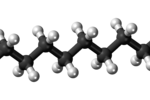
Sebacic_acid_3D_ballBio based polymers are those derived from renewable resources and appear to be more environmental friendly than polymers derived from petroleum. Due to their ecological benefits, the production and consumption of biobased polymers are increasing.

Bio based polyamide, also called nylon, is one of the oldest bio based engineering plastics. Most of them are currently derived from castor oil. The key ingredient for the manufacture of bio based polyamide is Sebacic acid derived from castor oil.

In 2012, Arkema acquired Casda Biomaterials, the earliest manufacturer of Sebacic acid in China. Roland Glotzer, who previously headed Arkema Chemicals took control as the CEO of Casda Biomaterials in August 2014.

A 2015 interview with Roland Glotzer gives us an overview of Sebacic acid market.

Some of the key highlights from the interview are discussed below:

  1. Bio based polymers made from Sebacic acid have advantages like excellent flexibility, durability, hydrophobicity and lower melting temperatures.
  2. Sebacic acid currently sells in the range USD 3550 to USD 3700 per ton FOB China, while caprolactam, another raw material for polyamide from petroleum costs around USD 2700 per ton. That is, Sebacic acid based polyamides are costlier. But these Sebacic acid based polyamides could offer better physical and chemical properties such as better flexibility and hydrophobicity. Hence the selection of Sebacic acid as feedstock is based on its performance rather than its cost.
  3. Sebacic acid is widely used in plasticizers where sebacates i.e. esters of Sebacic acid are mainly involved in their manufacture. This is due to the superior low temperature resistance of sebacates compared to phthalate plasticizers. Dibutyl sebacate is widely used in food packaging, while Dimethyl sebacate is used in light stabilizers for cellulose resins, synthetic resins and rubbers.
  4. The current markets for Sebacic acid are in the production of various polymers, esters, as a corrosion inhibitor, as an additive for low temperature lubricants, as a buffering agent in cosmetics.
  5. The future of Sebacic acid and its derivatives market is high. However, the industry also requires sustainable financial results. The key factor is the cost of castor oil. We hope that castor oil would continue to be available in prices affordable by all in the supply chain while also ensuring that Sebacic acid would continue to be cost competitive against other possible substitutes.

Source

A Sebacic Acid Production Plant in Oman

sebacic acidRecent news items suggest that Oman is setting up a plant to produce sebacic oil from castor oil.

While new sebacic acid plants in themselves is not such interesting news, it is interesting to see an Oil Economy country going for a renewable oil production.

This news was first reported by CastorOil.in many months back.

In May 2015, Oman Sebacic Company, promoted by India-based Shipra Agrichem Pvt Ltd and Omani businessman Shaikh Hilal bin Khalid al Mawali, signed an agreement with for the development of this one-of-a-kind project at Duqm. Shipra operates a 10,000 metric tonnes per annum capacity sebacic acid plant in Vadodara on India’s west coast.

the plant construction is expected to start in Q1 2016.

Alongside the sebacic acid complex project is a project to cultivate 66,000 acres of castor, under a total buyback agreement by the project promoter, Pradeep Nair.

Interesting indeed. Now sure what the driver was for locating the plant in Oman, if Shipra is already operating a sebacic acid plant in India; perhaps diversifying risk, or perhaps of the investment interest shown by Oman,

What is also interesting is the cultivation of castor, I am not entirely sure if the cultivation is supposed to be happening in Oman (which I doubt). More likely, the cultivation would be in Gujarat and either the castor seeds or castor oil from the cultivated crops would be completely bought by the Omanese company.

Am looking forward to further progress of this venture.
Pure Polyurethane and Castor Oil Based Polyurethane: Synthesis and Characterization

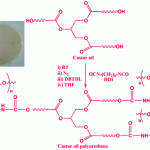
Scientists from Malaysia performed an experiment to compare the physico-chemical properties of high performance polyurethane prepared using pure poly propylene glycol (PPG) and that prepared from PPG and castor oil.castor oil polyurethane

Characterization studies indicated the presence of large -CH stretching in castor oil mixed polyurethane with larger oxidative thermal stability over pure PPG polyurethane. The tensile properties were found to be almost comparable showing that mixed polymers can be used in future to overcome environmental and economic crisis.

Source

Synthesis and Characterization of Castor Oil Based Hybrid Polymers and Their Polyurethane-Urea/Silica Coatings

Scientists performed an experiment to synthesize castor oil based hybrid polymers castor oil polyurethaneand their polyurethane urea-silica coatings. New acrylated alkoxysilane castor oil (AASCO) with hydrolysable –Si–OCH3 was synthesized from CO, maleic anhydride and 3-(Trimethoxysilyl) propyl methacrylate via free radical copolymerization method.

Characterization studies showed that castor oil modified silane based hybrid coatings had better mechanical, viscoelastic properties.

More