Stable Polyanhydride Synthesized from Sebacic Acid & Ricinoleic Acid

Polyanhydrides are a class of biodegradable polymers that are usually unstable and prone to hydrolytic degradation and depolymerisation. They need to be stored at -20°C, Polyanhydridepacked under inert atmosphere until use.

Now researchers from Israel have found a new stable polyanhydride obtained from sebacic acid and ricinoleic acid. The new stable polyanhydride was synthesized with alternating ester anhydride structure that is stable at 25 °C for over 18 months. The copolymer is also stable in chloroform solution and under γ-irradiation.

More

New Castor Oil Based Wood Adhesives

Recent study shows production of wood adhesives from castor oil.

Commonly used wood adhesives were anima (hide) glue, urea-formaldehyde resin adhesives, resorcinol-formaldehyde, phenol-formaldehyde, polyurethane, castor-oil-800067etc.

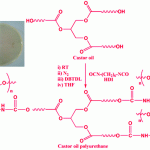
Now scientists from Iran have conducted an experiment to produce polyester polyols, which is an important compound in polymeric polyurethane adhesives, from castor oil. The polyester polyols were synthesized condensation polymerization of different dicarboxylic acids with castor oil.

Characterization studies were also carried out to determine the shear strength value in various conditions such as cold water, hot water, acid and alkali solutions.

More

New Castor Oil-based Polymeric Surfactants

Recent study has found new castor oil based polymeric surfactants.

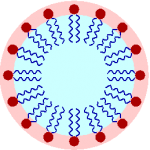
Polymeric surfactants are polymeric substances which tend to reduce surface tension of a liquid in which it is dissolved.

Now scientists from China have conducted an experiment to produce castor oil based polymeric surfactants. Dehydrated castor oil was epoxidized using phosphoric acid and acetic acid to produce epoxidized castor oil. Ring opening polymerization surfactantmethod was followed with to produce polymerized epoxidized castor oil (PECO) and hydrolysed PECO (HPECO).

Characterization studies showed that castor oil based polymeric surfactants exhibited high efficiency to reduce the surface tension of water.

Source

New Castor Oil based Copolymers for Surface Coating Applications

Recent study finds castor oil sourced copolymers for surface coating applications.

Scientists from India have performed the experiment where acrylic polyols comprising castor oil derived hydroxy functional acrylic copolymers were synthesized by co-reacting imagesmodified hydroxy functional castor oil with a variety of acrylic monomers. Solution polymerization method was followed in the presence of an inhibitor.

The synthesized resins when cured with suitable amino-resin cross-linkers provided tough, glossy and weather resistant coatings.

Source

New Castor Oil based Antistatic and Anticorrosive Materials

Recent study has found the use of castor oil as antistatic and anticorrosive materials.

Antistatic property is defined as the fast dissipation of static electricity (static charge). It is evaluated using two measures – surface resistance and half-life. The lower the surface resistance (Ω), the higher the antistatic property; and the shorter the half-life (s), the higher the antistatic property.

A previous study conducted by scientists from Korea in 2004, has found that waterborne -polyurethane coating materials containing conductive polyaniline blend films showed castor oil polyurethanereduced antistatic half-life.

Now, scientists from Korea and India have prepared castor oil-based waterborne polyurethane/polyaniline (COWPU/PAni) conducting polymer blend films. The waterborne polyurethane synthesized from isophorone diisocyanate was reacted with castor oil to form prepolymers. Also, COWPU/PAni hybrid dispersions were synthesized to make different conductive composites.

Characteristic studies showed that COWPU/PAni conducting blend films could be used as antistatic and anticorrosive coating materials.

Source

Novel Bio-Based Polyols for Flame Retardant Polyurethane Sealants

A sealant is an elastomeric material that allows for 25% to 50% movement. They are used to level, fill gaps, seal holes and provide bonding and protection. Sealants are made by using either silicone or polyurethane.

Polyurethane sealants are formed by reacting an isocyanate component with amines, polyols or other active hydrogen compounds. Some polyurethane sealants are flame retardant where flame retardants such as ammonium polyphosphate are used along with the polymers to obtain the desired character. So far, only specialty polyols polyurethane-joint-sealantlike polycarbonate polyols, polycaprolactone polyols, polybutadiene polyols, and polysulfide polyols have been used to make polyurethane sealants.

Now, Chinese researchers have developed a novel ricinoleic acid based phosphorus and nitrogen-containing flame retardant polyols (FRPE) for polyurethane sealants. The flame retardant polyols were characterized by different characterization techniques.

Flame retardant polyurethane sealants (FR-PUS) were prepared by curing flame retardant polyols with methylene diphenyl diisocyanate (MDI-50). The flame retardant properties of the polyurethane sealants were investigated using limiting oxygen index (LOI), cone calorimeter testing (CCT) and thermogravimetric analysis (TGA).

Results showed that flame retardant polyols could enhance the thermal stability and flame retardancy of polyurethane sealants without adding any other flame retardant.

Now, industries manufacturing polyurethane sealants could produce them in a renewable way which will be environmental friendly.

Source

Sebacic Acid – Unique, Bio-Based Feedstock for Green Polymers: Overview of Interview with Roland Glotzer

Sebacic_acid_3D_ballBio based polymers are those derived from renewable resources and appear to be more environmental friendly than polymers derived from petroleum. Due to their ecological benefits, the production and consumption of biobased polymers are increasing.
Bio based polyamide, also called nylon, is one of the oldest bio based engineering plastics. Most of them are currently derived from castor oil. The key ingredient for the manufacture of bio based polyamide is Sebacic acid derived from castor oil.

In 2012, Arkema acquired Casda Biomaterials, the earliest manufacturer of Sebacic acid in China. Roland Glotzer, who previously headed Arkema Chemicals took control as the CEO of Casda Biomaterials in August 2014.

A 2015 interview with Roland Glotzer gives us an overview of Sebacic acid market.

Some of the key highlights from the interview are discussed below:

  1. Bio based polymers made from Sebacic acid have advantages like excellent flexibility, durability, hydrophobicity and lower melting temperatures.
  2. Sebacic acid currently sells in the range USD 3550 to USD 3700 per ton FOB China, while caprolactam, another raw material for polyamide from petroleum costs around USD 2700 per ton. That is, Sebacic acid based polyamides are costlier. But these Sebacic acid based polyamides could offer better physical and chemical properties such as better flexibility and hydrophobicity. Hence the selection of Sebacic acid as feedstock is based on its performance rather than its cost.
  3. Sebacic acid is widely used in plasticizers where sebacates i.e. esters of Sebacic acid are mainly involved in their manufacture. This is due to the superior low temperature resistance of sebacates compared to phthalate plasticizers. Dibutyl sebacate is widely used in food packaging, while Dimethyl sebacate is used in light stabilizers for cellulose resins, synthetic resins and rubbers.
  4. The current markets for Sebacic acid are in the production of various polymers, esters, as a corrosion inhibitor, as an additive for low temperature lubricants, as a buffering agent in cosmetics.
  5. The future of Sebacic acid and its derivatives market is high. However, the industry also requires sustainable financial results. The key factor is the cost of castor oil. We hope that castor oil would continue to be available in prices affordable by all in the supply chain while also ensuring that Sebacic acid would continue to be cost competitive against other possible substitutes.

Source

Synthesis and Characterization of Castor Oil Based Hybrid Polymers and Their Polyurethane-Urea/Silica Coatings

Scientists performed an experiment to synthesize castor oil based hybrid polymers castor oil polyurethaneand their polyurethane urea-silica coatings. New acrylated alkoxysilane castor oil (AASCO) with hydrolysable –Si–OCH3 was synthesized from CO, maleic anhydride and 3-(Trimethoxysilyl) propyl methacrylate via free radical copolymerization method.

Characterization studies showed that castor oil modified silane based hybrid coatings had better mechanical, viscoelastic properties.

More

Production of Oriented Strand Board (OSB) with Schizolobium amazonicum and Castor Oil Based Polyurethane Resin

Researchers from Brazil performed an experiment to evaluate the feasibility of OSB Castor oilpanel production Parica (Schizolobium amazonicum) wood particles bonded by castor oil based polyurethane resin. Three different resin contents (8%, 10% and 12%) were evaluated.

Results showed that panels produced with 8% of resin content were best as they were compatible with norm requirements and used less resin in the manufacturing process. Thus Parica wood and castor oil based polyurethane resin in the OSB panels production is feasible.

Source

Electroactive Polyurethane/Siloxane Derived From Castor Oil as a Versatile Cardiac Patch

Scientists from Italy conducted an experiment to synthesize electroactive polyurethane/siloxane films from castor oil for use as a cardiac patch. The electroactive films containing aniline tetramer were prepared through sol gel reaction of trimetcastor oil polyurethanehoxysilane functional intermediate polyurethane prepolymers obtained from castor oil and polyethylene glycol.

Physicochemical, mechanical and electrical conductivity of samples were evaluated and correlated with their structural characteristics. Results showed that the prepared films were compatible with proliferation of C2C12 and had the potential to enhance myotube formation even without electrical stimulation.

Source