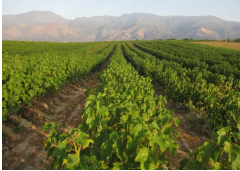
Castor Meal to Replace Soybean Meal as Lamb Feed

Researchers at Brazil conducted a study to understand the effect of replacement of soybean meal by wet or dry castor bean meal in diets of feedlot lambs. They assessed animal performance, carcass traits, intake, digestibility and hepatic function.

Control animals were fed with soybean meal while lambs for test were casfed with dry or wet castor meal treated with calcium hydroxide for 70 days. Lambs were slaughtered and evaluated at the end of 70 days. Dry matter intake and digestibility, final body weight, average daily gain and carcass weights were not affected by the substitution of soybean meal by castor source.
Serum levels of aspartate aminotransferase and alanine aminotransferase enzymes did not differ among treatments indicating no effect of treated CM on hepatic function.

The results show that the castor meal can completely replace soybean meal in the diet of finishing lambs without negative impacts.

Source

Castor Oil-Sebacic Acid Polyanhydrides for Controlled Release of Drugs

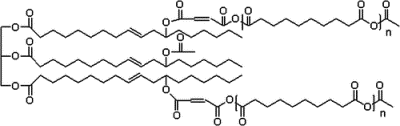
Researchers from the Indian Institute of Science, Bangalore, India, have synthesised aie-2014-00679u_0007 family of high molecular weight castor oil based biodegradable polyanhydrides by a catalyst-free melt-condensation reaction between prepolymers of castor oil and sebacic acid. Sebacic acid is found to increase the crystallinity of the polymer. Water wettability and ductility decreased while strength of the polymer sharply increased with increase in SA content. Invitro hydrolytic degradation studies indicated surface-eroding behaviour. The degradation products also found to have minimal cytotoxic effects. Thus, a CO-SA polyanhydrides can be characterized for controlled release of drugs, by modulation of physical, mechanical and degradation kinetics.

Source

Polyurethane–Organoclay Nanocomposites Based on Castor Oil Polyols

Researchers from University of Technology, Baghdad, have synthesized castor oil-based polyurethanes–organoclay (COPUs-Cloisite 30B) nanocomposites by mixing polypropylene glycol polyol and dehydrated castor oil (15 %), with C30B nanofillers at different weight percentages. Various analyses such as OLYMPUS DIGITAL CAMERAFourier Transform Infrared Spectroscopy, Fourier scanning Electron Microscopy, Scanning Electron Microscopy and X-ray diffraction were performed to evaluate the physico-chemical properties of COPUs-Cloisite 30B. Thermal stability and tensile strength were found to improve upto ~30 C and ~240% respectively, with 5 wt% of C30B . These improved properties allow it to be used in coatings, adhesives and automotives.

Source

Read more about castoroil-based polyurethanes

SGB’s New Hybrid of Jatropha with Shorter Maturation Period

JatrophaSGB Inc, San Diego, has successfully developed a Jatropha hybrid, which has rapid time of maturity and high yielding capacity. The major barrier, concerned with Jatropha is its long time of maturation of about 5 years. The latest generation hybrids have been reduced to one to two years, which is remarkable.

SGB conducted pre-commercial trials with its top 10 hybrids, and the best performing hybrid being recognised, gave an equivalent of 300 gallons of oil per acre in year one, with a corresponding protein production of 0.6 metric tons which is 30% higher than that of yield from soy. The protein is of high quality and contains essential amino acids, comparable to soybean.

The underlying reason for early failures of Jatropha:
• Insufficient germplasm diversity that obstruct effective breeding and improvement of Jatropha,
• Lack of understanding and/ or implementation of the agronomic practices to unlock full potential of Jatropha

Finally, SGB is done with its necessary trials on this super breed, and is ready to commercialise. An investment of $40 million and 7 years of research has resulted in a viable alternative to soybean and palm as a sustainable source of oil and protein.
Source

Castor Oil Based Detergents Shown To Be Effective In Controlling Microorganisms

A research study was conducted to evaluate the effect of a castor oil-based detergent on strawberry crops treated with different classes of pesticides. Experimental crops of greenhouse strawberries were cultivated in five different ways with control groups using pesticides and castor oil-based detergent. The results showed that the crops when treated with castor oil-based detergent, presented the lowest amount of pesticide residues and the highest quality of fruit produced.

The research and use of castor oil-based detergent is still incipient,but the results are highly promising in view of its apparent efficiency in the control of microorganisms, its low toxicity and its low cost in Brazil. For the other hand, it could represent an excellent alternative to control a wide range of organisms, since it is environmentally safe, biodegradable, non-resistible to botanical insecticides, and its cost is low.

Read More: http://www.scielo.br/pdf/qn/v35n2/21.pdf

Patent – Dehydrated Castor Oil As An Animal Feed Supplement

This post discusses an invention which uses dehydrated castor oil  (DCO) as a food supplement to animals. Conjugated linoleic acid (CLA), as a free fatty acid, has been studied extensively as a probiotic feed supplement for pigs, chickens, and other animals. However, the cost of CLA, in its free fatty acid form is relatively high. The inventors thereby, proposed the way of using dehydrated castor oil as an alternative to CLA. DCO contains 25-30% conjugated linoleic acid triglyceride ester (CLA-TG) and 65-70% “normal” linoleic acid triglyceride ester (LA-TG) (i.e., not conjugated).

The inventor has discovered that when DCO is administered as an additive to an animal feed, one or more of the quality indices of the animal’s meat are improved. For example, for pigs in the finishing phase, the inventor has surprisingly and unexpectedly discovered that when the pigs receive an animal feed composition containing an amount of dehydrated castor oil, at least one of the quality indices of the pig’s meat, namely, the iodine value of the meat, is improved. In the case of such pigs, the significantly lowered iodine value heralds a significantly improved fat firmness in the meat, which, in turn, leads to improved slicing and processing of the resulting meat.

More about the invention from here – https://www.google.co.in/patents/US8445041?dq=CASTOR+SEED&hl=en&sa=X&ei=dNseUqS7GcmHrQf3tIGYAQ&ved=0CFIQ6AEwBDgK

Castor Oil Research, Production and Challenges – A Review

In this article, castor historical research information is compiled and  the tremendous future potential of the plant is studied.Topics discussed in this review include: (i) germplasm, genetics, breeding, biotic stresses, genomesequencing, and biotechnology; (ii) agronomic production practices, diseases, and abiotic stresses; (iii) management and reduction of toxins for the use of castor meal as both an animal feed and an organic fertilizer; (iv) future industrial uses of castor including renewable fuels; (v) world production, consumption, and prices; and (vi) potential and challenges for increased castor production.

Read the article from :https://dl.sciencesocieties.org/publications/aj/pdfs/104/4/853


Castor Bean Genome Sequence

This post discusses about a castor bean genome research published in 2010 by the J. Craig Venter Institute (JCVI) and the Institute for Genome Sciences (IGS), University of Maryland School of Medicine.

Because of the potential use of castor bean as a biofuel and its production of the potent toxin ricin, the team focused efforts on genes related to oil and ricin production. They analyzed important metabolic pathways and regulatory genes involved in the production and storage of oils in the castor bean.The analyses could be important for comparative studies with other oilseed crops, and could also allow for genetic engineering of castor bean to produce oil without ricin.

Researchers sequenced and assembled a 4X draft of the ~400 Mbp castor bean genome using a whole genome shotgun strategy. In addition, ~50,000 ESTs from different tissues have been produced to help gene discovery and annotation. The results of their work showed that the castor genome is 350 Mb and has an estimated 31,237 genes. The team also discovered that the ricin gene family was larger than previously thought, and they revealed approximately 28 genes in the ricin producing family.

Preliminary comparisons between castor bean genes and ESTs from other available Euphorbiaceae species, showed that cassava shares the highest sequence similarity with castor bean.

Read More From:

http://www.prnewswire.com/news-releases/castor-bean-genome-published-by-research-team-including-scientists-from-the-venter-institute-101259689.html

http://castorbean.jcvi.org/index.php


Some interesting links

Building Energy Analytics

Some Innovative & Unique Solar Power

Castor Genetic Resources: A Primary Gene Pool for Exploitation

Castor  is grown across the world in tropical, sub-tropical and warm temperate regions. Vast castor germplasm collections are being conserved in more than 50 genebanks across the world. But consolidated reports on their status and value are not available to tap their potential. Utilization of vast global germplasm could only be enhanced when the information on germplasm is shared and seed are exchanged.

This review (http://www.sciencedirect.com/science/article/pii/S0926669011002081) provides information on current status of global castor collections and an overall view of potential of these collections besides highlighting the challenges and opportunities facing germplasm.


Biodegradable Lubricant from Castor Biodiesel Esters

Worldwide, 12 million tonnes per year of lubricants are disposed of in the environment through leakages, exhausted gas, incorrect disposal, water–oil emulsions and so on. Some are resistant to biodegradation, representing an environmental threat. One solution to modify this situation is the replacement of mineral oils by biodegradable synthetic lubricants. Esters, whose chemical structures are similar to natural triglycerides, are excellent substitutes for mineral oils. Castor oil contains around 90% ricinoleic acid, and as a result, castor oil has a higher viscosity and a lower viscosity index, compared with other vegetable oils. This work was based on the production of biodegradable lubricant base fluids from castor biodiesel esters, using various chemical catalysts.

Read More – http://onlinelibrary.wiley.com/doi/10.1002/ls.1205/full

Some interesting links

Building Energy Analytics

Some Innovative & Unique Solar Power