Researchers from Brazil conducted an experiment to evaluate the antimicrobial actions of sodium hypochlorite and castor oil solutions against specific microorganisms. Acrylic  resin specimens were obtained, sterilized and contaminated with important bacterial and Candida species.
Results showed that sodium hypochlorite solutions completely eliminated all microorganisms while castor oil solution provided moderate efficacy and performed differently on tested species.
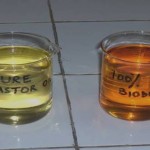 of biodiesel conversion from crude castor oil to castor oil biodiesel. Acid-base catalysed transesterification reaction was carried out under different reaction conditions to obtain high yield of castor biodiesel.
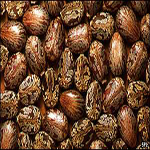 castor seed on the yield of oil. Catalytic pyrolysis was carried out at 400°C for different ratios of catalyst to biomass using zeolite as catalyst.
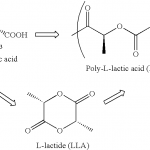 l core was synthesized. The nucleating effect of the branched polymer on the crystallization of PLLA was analyzed using differential scanning calorimetry and a polarized optical microscopy.
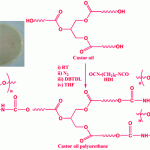 Polyurethane was synthesized using transesterified castor oil and partially Biobased isocyanate with varying concentrations of isocyanate and hydroxyl groups.
 oil (ECO) and used it as a prime material to develop acrylated epoxidized castor oil (AECO) networks. AECO nanocomposites were prepared by sol-gel method using OMMT clay and silane.
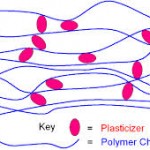 ide as a secondary plasticizer. Initially epoxidized castor oil (ECO) and castor oil phosphate ester (COPE) were synthesized and their structure was characterized. The property of PVC blends plasticized with ECO and COPE as a secondary plasticizer was studied.
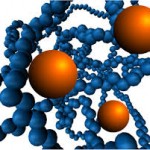 Researchers developed bio-based polyurethane (BPU) using a castor oil/poly (ε-caprolactone) hybrid polyols and hydrophobic BPU ultrafine fibres containing modified silica (m-silica) by electrospinning process. The rheological analysis of the network structure between the BPU and m-silica showed improved mechanical properties and thermal stability. The average fibre diameter of the hybrid ultrafine fibres decreased with increasing m-silica content. Moreover, the m-silica nanoparticle provided an effective surface wettability to BPU ultrafine fibres, thus making it a hydrophobic molecule. All these improved properties makes BPU/m-silica ultrafine fibres, a better replacement for petroleum-based polyurethane membrane, thus allowing its application in the field of bio filters, eco-friendly textiles, and biomedical engineering.