Bio-Based Branched Polymer Bearing Castor Oil Core as a Nucleating Agent for Poly(L -Lactic Acid)

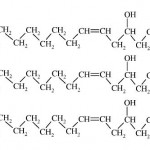
Researchers from Japan performed an experiment to analyze the change in characteristics of PLLA by introducing a biobased branched polymer bearing castor oil core as a nucleating agent.  The Biobased polymer bearing castor oiPoly l-lactic acidl core was synthesized. The nucleating effect of the branched polymer on the crystallization of PLLA was analyzed using differential scanning calorimetry and a polarized optical microscopy.
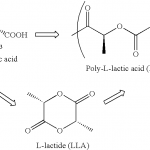
Results showed that by the addition of the branched polymer, the spherulite size of PLLA became smaller and the strain at break of PLLA containing the branched polymer was improved.
Source

Experimental Optimization of Solvent Extraction of Castor Oil via Response Surface Methodology

Castor oilResearchers from Malaysia performed an experiment to optimize the solvent extraction of castor oil through response surface methodology.  Castor oil was extracted using solvent extraction with three different solvents: hexane, petroleum-ether and ethanol. Optimization of the percentage of oil yield was carried out using response surface methodology and Box-Behnken design.

The model equations gave  good fit with appropriate coefficient of determination for the three solvents stating that response surface methodology would e suitable for optimization of percentage oil yields.

Source

Development of Green Waterborne UV Curable Castor Oil Based Urethane Acrylate Coatings: Preparation and Property Analysis

castor-oil-800067Scientists from India conducted an experiment to analyze the suitable source needed to manufacture UV-curable polyurethane dispersions for coating applications. They synthesized a series of novel waterborne UV-curable polyurethane dispersions from castor oil, Isophorone diisocyanate (IPDI), Dimethylolpropionic Acid (DMPA)and Hydroxyethylmethacrylate (HEMA) by acetone process.
The prepared UV-PUDs were mixed with three different monomers and characterization studies were conducted. Results showed that the combination of renewable resource (castor oil) and environment compliant technology could make these UV-PUDs suitable for coating applications.

Source

Dynamic Surface Tensions of Castor Oil Acid Methyl Ester Ethoxylate Aqueous Solutions

Scientists from China performed an experiment to analyze the dynamic surface tension of aqueous solutions of castor oil acid methyl ester ethoxylate. The dynamic surface Castor oiltensions were measured by bubble pressure method. The effect of dynamic surface tension at different concentration, temperature and presence of inorganic electrolyte were investigated.

The results showed that the dynamic surface tension decreases with increase in temperature and increases with increase in inorganic electrolyte concentration.

More

Optimization of Biodiesel Ultrasound-Assisted Synthesis from Castor Oil using Response Surface Methodology (RSM)

Scientists from Iran performed an experiment to optimize the ultrasocastor oil biodieselund assisted biodiesel synthesis from castor oil using response surface methodology. Parameters such as reaction time, methanol to oil molar ratio, ultrasonic cycle and ultrasonic amplitude were taken into consideration to optimize the biodiesel synthesis process.
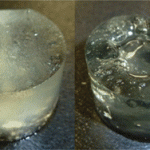
Through RSM analysis, it was found that the reaction time has the most significant effect on the reaction yield.

Source

Blending and Optimization Study on Improved Low-temperature Properties of Chemically Modified High Free Fatty Acid Castor Oil–methyl esters

Researchers from India conducted an optimization study to improve low-temperature properties of chemically modified high free fatty acid castor oil methyl esters. Castor Castor oiloil fatty acid methyl ester was prepared and epoxidation process was carried out using hydrogen peroxide as oxygen donor and IR-120 as heterogenous acid catalyst.

Response surface methodology was implemented to optimize the epoxidation process. The results showed that epoxide blended with COFAME showed an improved pour point compared with pure epoxide.

Source

Preparation of Functionalized Castor Oil Derivatives with Tunable Physical Properties Using Heterogeneous Acid and Base Catalysts

Scientists from India conducted an experiment to prepare functionalized castor oil derivatives with tunable physical properties by using heterogeneous acid and base catalysts. Epoxidized castor oil (ECO) was used as a raw material to prepCastor oilare the different functionalized castor oil derivatives namely ring-opened glyceryl ricinoleates, epoxy alkyl ricinoleates, and ring-opened alkyl ricinoleates, using two chemical reactions, ring opening and transesterification.

Among several acid catalysts screened, Amberlyst 15 showed maximum conversion for ring opening of ECO with methanol. By using CaAl-layered double hydroxide (LDH) derived oxides as base catalyst, maximum yield of epoxy alkyl ricinoleates were obtained through transesterification of ECO. The physical properties of these derivatives can be used to design tailor-make material for industrial needs.

More

Thickening Properties of Several NCO-Functionalized Cellulose Derivatives in Castor Oil

Researchers from Spain performed an experiment to analyze the thickening properties of NCO-functionalized cellulose derivatives in castor oil. Cellulose derivatives were initially functionalized with NCO and subsequently dispersed in castor oil to form oleogels. The oleogels were rheologically investigated and gel microstroleogelsucture was determined.

Results showed that cellulose derivatives after NCO functionalization showed reduced thermal resistance but the oleogels showed increased thermal resistance. The difference in rheological properties is based on the balance between polar and non-polar groups in the biopolymer structure and the size of these substituents.

More

Enzymatic Preparation of Castor Oil-based Feruloylated Lipids Using Ionic Liquids as Reaction Medium and Kinetic Model

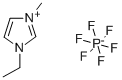
Researchers from China conducted an experiment to analyze the effect of ionic liquids on the enzymatic transesterification of ethyl ferulate (EF) with castor oil. Three kinds of ionic liquids (BF4, PF6 and TF2N) were used for the experiment.ethyl imidazolium phosphate

Of the three kinds of imidazolium ionic liquids, EMIMPF6 exhibited the highest ethyl ferulate conversion and showed excellent reaction selectivity for lipophilic castor oil based feruloylated mono- and di-acylglycerols (FMAGs and FDAGs) formation.

Source

Biocompatibility and Osteogenesis of the Castor Bean Polymer Doped with Silica (SiO2) or Barium Titanate (BaTiO3) Nanoparticles

Scientists from Brazil conducted an experiment to evaluate the biocompatibility and osteogenesis of castor oil polymer doped with SiO2 or BaTiO3 nanoparCastoroil polymerticles.

Twenty-four rats with bone defect were experimented with castor oil polymer doped with SiO2 or BaTiO3. Euthanasia occurred 30 and 60 days after surgery and the femurs were sent to histological analysis and MEV. Results showed that the implants were biocompatible and allowed for progressive osteogenesis.  Thus, castor oil polymer doped with SiO2 or BaTiO3 remains biocompatible and allows for osteogenesis.

Source