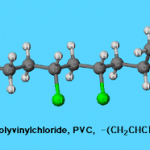
Effect of Chlorinated Phosphate Ester Based on Castor Oil on Thermal Degradation of Poly (Vinyl Chloride) Blends and its Flame Retardant Mechanism as Secondary Plasticizer

Scientists from China conducted an experiment to analyze the effect of castor oil based chlorinated phosphate ester on thermal degradation of PVC. A novel flame rPVCetardant chlorinated phosphate ester based on castor oil (CPECO) was synthesized. Its chemical structure was characterised with FTIR and NMR.

Application of CPECO as a secondary plasticizer for PVC gained satisfied flame retardancy and substituted for dioctyl phthalate (DOP) partly. Increase in PVC blends was observed. The flame retardant mechanism showed that phosphorus containing generated from the pyrolysis of CPECO   could promote char residual.

More

Inter-Vesicle Polymerization Using Non-ionic Oxyethylene Hydrogenated Castor Oil

Scientists from Japan conducted an experiment to analyze the nature and Castor oilcharacteristics of polymerizable vesicles produced by using oxyethylene hydrogenated castor oil.  Polymerized vesicles were produced in aqueous solution. Hydrogen NMR spectroscopy was used to investigate the polymerization process using azobis(isobutyronitrile) as an initiator.
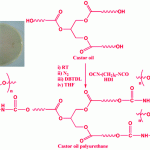
Results showed that the polymerized vesicles were resistant to disruption by polyoxyethylene(10) octylphenyl ether. The degree of resistance depends on vesicle concentration and incubation temperature and this dependence is due to the inter-vesicle polymerization.

Source

Thermo-mechanical Analysis of Foam Based on Castor Oil Polyol

Researchers from India conducted an experiment to analyze the thermo-mechanical properties of castor oil based polyol foam. Castor oil was extracted usicastor oil polyurethaneng hydraulic press and was allowed to react with toluene diisocyanate and other material to obtain the polyurethane foam. Incorporation of castor oil increased the hardness, density and compression of the foam. The cost of production also significantly decreased.
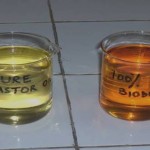
These results suggest that castor oil could be widely used for the manufacture of polyurethane foam.

Source

Transesterification of Castor Oil with Methanol – Kinetic Modelling

Scientists from India conducted an experiment to determine the kinetcastor oil biodieselics of the production of biodiesel. Transesterification of castor oil was carried out with methanol and sulphuric acid as catalyst under different temperature conditions.
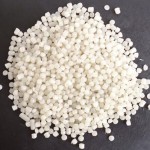

The obtained results were analyzed with respect to three types of reaction kinetics and it was concluded that the experimental data followed second-order reversible reaction kinetics.

Source

Characterization of Novel Castor Oil-Based Polyurethane Polymer Electrolytes

Researchers from Malaysia conducted an experiment to analyCastor oil polyurethaneze the application of castor oil based polyurethane as a host in polymer electrolyte for electrochemical devices. The synthesized castor oil polyurethane was added with lithium iodide and sodium iodide in different wt% to form a film of polymer electrolytes.

The results showed that castor oil based polyurethane polymer electrolytes can be used  as an alternative membrane for electrochemical devices.

Source

Synthesis of Biodiesel from Castor Oil: Silent versus Sonicated Methylation and Energy Studies

Researchers from Spain conducted an experiment to compare conventional ancastor oil biodieseld ultrasound-assisted transesterification for the production of biodiesel from castoroil. The results showed that sonicated transesterification leads to higher castoroil methyl ester yield.

The energy required along each type of transesterification was measured which showed that sonicated transesterification consumes lower amount of energy than conventional one.

Source

Effect of Castor Oil/Polycaprolactone Hybrid Polyols on the Properties of Biopolyurethane

Scientists from Korea have conducted an experiment to test the effects of castor oil/ polycaprolactone hybrid polyols on the properties of biopolyurethane. Organic solvent soluble castor oil/polycaprolactone diol (PCL) based polyurethane was prepared.Polycaprolactone

The results showed that the tensile properties and shape memory of castor oil/PCL based polyurethane were enhanced when compared with PCL based polyurethane. The enhancement in properties was due to the increased hard segment portion and cross linking density by 3 urethane bonds formed per molecule in the castor oil/PCL mixed system.

This research suggests that castor oil/ PCL based polyurethane could be used as biobased coating materials.

More

Synthesis and Characterization of Acrylated Epoxidized Castor Oil Nanocomposites

Scientists from India synthesized a renewable resource based epoxidized castorCastor plant oil (ECO) and used it as a prime material to develop acrylated epoxidized castor oil (AECO) networks. AECO nanocomposites were prepared by sol-gel method using OMMT clay and silane.

The results showed that AECO/1 wt.% OMMT system increases in tensile strength from 28 to 37 MPa and flexural strength from 54 to 63 MPa as compared with the AECO system, respectively.

Source

Polyurethane–Organoclay Nanocomposites Based on Castor Oil Polyols

Researchers from University of Technology, Baghdad, have synthesized castor oil-based polyurethanes–organoclay (COPUs-Cloisite 30B) nanocomposites by mixing polypropylene glycol polyol and dehydrated castor oil (15 %), with C30B nanofillers at different weight percentages. Various analyses such as OLYMPUS DIGITAL CAMERAFourier Transform Infrared Spectroscopy, Fourier scanning Electron Microscopy, Scanning Electron Microscopy and X-ray diffraction were performed to evaluate the physico-chemical properties of COPUs-Cloisite 30B. Thermal stability and tensile strength were found to improve upto ~30 C and ~240% respectively, with 5 wt% of C30B . These improved properties allow it to be used in coatings, adhesives and automotives.

Source

Read more about castoroil-based polyurethanes

Proteome analysis of castor bean seeds

Research Abstract: Castor bean (Ricinus communis L.) seeds serve as raw material for the production of nonedible oil used in medicine and industry, whereas the presence of allergenic and toxic proteins in the residue left after oil extraction precludes the use of this protein-rich by-product in animal feeding. To better understand the enzymes involved in the biosynthesis and degradation of fatty acids and to identify proteins with toxic/anti-nutritional properties, extracts of developing and germinating seeds were prepared and prefractionated according to solubility properties of the proteins. An enriched plastid organelle fraction embracing mostly plastids and mitochondria was also prepared. Two-dimensional electrophoresis (2DE) reference maps of these fractions were obtained from which nearly 400 proteins were identified by matrix-assisted laser desorption ionization-time of flight-time of flight (MALDI-TOF-TOF) mass spectrometry after a search in a National Center for Biotechnology Information (NCBI) database and in an expressed sequence tag (EST) primary bank prepared from a cDNA library of developing seeds. These proteomics techniques resulted in the identification of several classes of seed reserve proteins such as 2S albumins, legumin-like and seed storage proteins, as well as other proteins of plastidial or mitochondrial functions and proteins involved in plant defense against biotic and abiotic stresses. It is expected that the collected data will facilitate the application of genetic techniques to improve the quality/profile of castor seed fatty acids, and pave the way for a rational approach to inactivate allergenic and toxic proteins, allowing the use of castor bean meal in animal feeding.

Read the full article from here – http://pac.iupac.org/publications/pac/pdf/2010/pdf/8201×0259.pdf