New Castor Oil based Antistatic and Anticorrosive Materials

Recent study has found the use of castor oil as antistatic and anticorrosive materials.

Antistatic property is defined as the fast dissipation of static electricity (static charge). It is evaluated using two measures – surface resistance and half-life. The lower the surface resistance (Ω), the higher the antistatic property; and the shorter the half-life (s), the higher the antistatic property.

A previous study conducted by scientists from Korea in 2004, has found that waterborne -polyurethane coating materials containing conductive polyaniline blend films showed castor oil polyurethanereduced antistatic half-life.
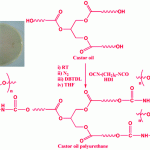
Now, scientists from Korea and India have prepared castor oil-based waterborne polyurethane/polyaniline (COWPU/PAni) conducting polymer blend films. The waterborne polyurethane synthesized from isophorone diisocyanate was reacted with castor oil to form prepolymers. Also, COWPU/PAni hybrid dispersions were synthesized to make different conductive composites.

Characteristic studies showed that COWPU/PAni conducting blend films could be used as antistatic and anticorrosive coating materials.

Source

Novel Bio-Based Polyols for Flame Retardant Polyurethane Sealants

A sealant is an elastomeric material that allows for 25% to 50% movement. They are used to level, fill gaps, seal holes and provide bonding and protection. Sealants are made by using either silicone or polyurethane.

Polyurethane sealants are formed by reacting an isocyanate component with amines, polyols or other active hydrogen compounds. Some polyurethane sealants are flame retardant where flame retardants such as ammonium polyphosphate are used along with the polymers to obtain the desired character. So far, only specialty polyols polyurethane-joint-sealantlike polycarbonate polyols, polycaprolactone polyols, polybutadiene polyols, and polysulfide polyols have been used to make polyurethane sealants.

Now, Chinese researchers have developed a novel ricinoleic acid based phosphorus and nitrogen-containing flame retardant polyols (FRPE) for polyurethane sealants. The flame retardant polyols were characterized by different characterization techniques.

Flame retardant polyurethane sealants (FR-PUS) were prepared by curing flame retardant polyols with methylene diphenyl diisocyanate (MDI-50). The flame retardant properties of the polyurethane sealants were investigated using limiting oxygen index (LOI), cone calorimeter testing (CCT) and thermogravimetric analysis (TGA).

Results showed that flame retardant polyols could enhance the thermal stability and flame retardancy of polyurethane sealants without adding any other flame retardant.

Now, industries manufacturing polyurethane sealants could produce them in a renewable way which will be environmental friendly.

Source

Synthesis and Characterization of Castor Oil Based Hybrid Polymers and Their Polyurethane-Urea/Silica Coatings

Scientists performed an experiment to synthesize castor oil based hybrid polymers castor oil polyurethaneand their polyurethane urea-silica coatings. New acrylated alkoxysilane castor oil (AASCO) with hydrolysable –Si–OCH3 was synthesized from CO, maleic anhydride and 3-(Trimethoxysilyl) propyl methacrylate via free radical copolymerization method.

Characterization studies showed that castor oil modified silane based hybrid coatings had better mechanical, viscoelastic properties.

More

Production of Oriented Strand Board (OSB) with Schizolobium amazonicum and Castor Oil Based Polyurethane Resin

Researchers from Brazil performed an experiment to evaluate the feasibility of OSB Castor oilpanel production Parica (Schizolobium amazonicum) wood particles bonded by castor oil based polyurethane resin. Three different resin contents (8%, 10% and 12%) were evaluated.

Results showed that panels produced with 8% of resin content were best as they were compatible with norm requirements and used less resin in the manufacturing process. Thus Parica wood and castor oil based polyurethane resin in the OSB panels production is feasible.

Source

Electroactive Polyurethane/Siloxane Derived From Castor Oil as a Versatile Cardiac Patch

Scientists from Italy conducted an experiment to synthesize electroactive polyurethane/siloxane films from castor oil for use as a cardiac patch. The electroactive films containing aniline tetramer were prepared through sol gel reaction of trimetcastor oil polyurethanehoxysilane functional intermediate polyurethane prepolymers obtained from castor oil and polyethylene glycol.

Physicochemical, mechanical and electrical conductivity of samples were evaluated and correlated with their structural characteristics. Results showed that the prepared films were compatible with proliferation of C2C12 and had the potential to enhance myotube formation even without electrical stimulation.

Source

Fulgar Develops Castor Oil-Based Fibre

Italian synthetic fibre business Fulgar has launched a new high performance nylon fibreFulgar made from biopolymer extracted from castor oil seed.
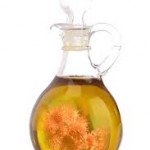
The fibre, Evo, is suitable for all applications, particularly, for the sports sector as it is ultra-light, stretchy and easily breathable.

Source

Synthesis and Characterization of Castor Oil-based Polyurethane for Potential Application as Host in Polymer Electrolytes

Researchers from Malaysia conducted an experiment to synthesize castor oil based polyurethane and analyse its potential application as a base material in polymer castor oil polyurethaneelectrolytes. Castor oil polyols were synthesized and mixed with 4,4′-diphenylmethane diisocyanate to synthesize the desired biobased polyurethane.

Characteristic studies showed that the synthesized polyurethane had favourable properties and hence could be used as a base material in polymer electrolytes.

Source

Versatile Post-Polymerization Modifications of a Functional Polyester from Castor Oil

Researchers from Spain performed an experiment to analyse post-polymerization modifications of a functional polyester derived from castor oil. castor oilThe aliphatic functional polyester was obtained by enzymatic polycondensation of dimethyl 2,9-dibromosebacate and 1,10-decanediol derived from castor oil.
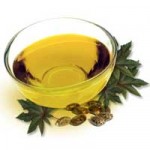
Results showed that the alkyl halide functionality reacted with thiols, amines and carboxylic acid under mild conditions showing high modification degrees.

More

Wound Healing Bionanocomposites Based on Castor Oil Polymeric Films Reinforced with Chitosan-Modified ZnO Nanoparticles

Researchers from Spain used castor oil as a matrix material to prepare biocompatible and biodegradable nanocomposite films filled with chitosan modified ZnO nanoparticles for wound healing. The biocomposites were prepared by solution mixing and casting method. The morphology, structure and wound healing properties of Castor oilthe films were analysed. The antibacterial activity of the films were investigated in the presence and absence of UV light.

Results showed that the antibacterial activity was stronger against gram positive bacteria. Composites with nanoparticle loading enabled faster wound healing thus showing the potential to be applied as antibacterial wound dressings.

Source

Epoxidation and Polymerization of Acrylated Castor Oil

Scientists from Turkey conducted a study to investigate a new type of bifunctional Castor oilmonomer obtained from castor oil. Castor oil was first reacted with acryloyl chloride to obtain acrylated castor oil. Epoxidized acrylated castor oil obtained after epoxidation reaction was characterized using various techniques.

After characterization, homo and block copolymers were synthesized and evaluated. It was observed that epoxidized acrylated castor oil copolymer showed higher storage modulus and higher thermal stability.

More