Chemical Modification of Cellulose Fibres Using Castor Oil

Cellulose fibre reinforced composites are considered suitable alternative to plastic products due to the environmental problems caused by the latter. However, pure cellulose fibres have a high hydrophilicity. Moreover, the polar character of these fibres causes their low compatibility with partially or totally hydrophobic polymer matrices.castor oil polyurethane
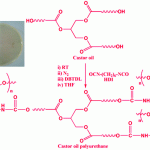
Owing to the poor wettability and adsorbability towards polymers, the surface modification of the fibres surface is essential, in order to improve the fiber/polymer compatibility and their interfacial adhesion. Hence researchers from France conducted a study to improve the properties of cellulose fibres by modifying the cellulose fibres with trialkoxysilane from castor oil.

Characteristic studies were carried out for the modified cellulose-castor oil polyurethane composites. Results showed that compared with the crude cellulose fibres, the organosilane treatment reduced the hydrophilicity of the natural fibres and increased the fiber/matrix compatibility.
More

New Castor Oil Based Green Plasticizer

Scientists from India performed esterification of furfuryl alcohol and castor oil fatty acid at 3:1 molar ratio, by immobilized Candida antarctica Lipase B in a solvent free system.castor-oil-800067 A maximum yield of ester was obtained. Performance of the FA-COFA ester plasticized Ethyl Cellulose (EC) films were evaluated by certain characteristic studies.


Results showed that the furfuryl alcohol-castor oil fatty acid ester with significant plasticizing property at a certain concentration could act as a substitute for traditional plasticizer dibutyl phthalate.

More

New Bio-based Building Block for Chemical Industry

Scientists from Colombia performed an experiment where a kinetic model was developed for high CO2 pressure carbonation of epoxidized castor oil to be used in the castor oil polyurethaneproduction of thermoset polymers and non-isocyanate polyurethanes.

Carbonated castor oil was produced from the epoxidized oil at 100–130 °C and a constant pressure of CO2 (0.5 MPa). Because the polyfunctional character of the product, it could find applications as monomer and as a synthetic building block for other bio-based chemicals.

More

New Castor Oil/PCL Based Bio-PU Foam

Scientists from Korea performed an experiment to fabricate castor oil/PCL based bio-polyurethane foam reinforced with nano cellulose. PU foam based on biomaterials castor oil polyurethanewas investigated to replace traditional petroleum-based polyol. Polyols were synthesized from castor oil (CO) and polycaprolactone (PCL). In addition, the effects of the nanocellulose on the thermal and mechanical properties of CO-based PU foam were investigated.

Results showed that addition of the nanocellulose could be an effective way to improve the mechanical and thermal properties of PU foams.

More

New Castor Oil Segmented Thermoplastic Polyurethane with Controlled Mechanical Properties

Researchers from Finland have found a method to produce novel castor oil segmented thermoplastic polyurethanes which have controlled mechanical properties.

Thermoplastic polyurethane (TPU) is an elastomer that is fully thermoplastic. Like all thermoplastic elastomers, TPU is elastic and melt-processable. TPU is a linear segmented block copolymer composed of hard and soft segments. The hard segment can be either aromatic or aliphatic. The soft segment can either be a polyether or polyester type, depending on the application.thermoplastic polyurethane

The new study shows that it is possible to produce thermoplastic polyurethanes using castor oil via polyaddition approach where the formation of prepolymers needs to be carried out with the addition of small amount of castor oil and excess of diisocyanate in the very first step. This is followed by the addition of the other polyols and finally a low molecular weight chain extender.

Results showed that the synthesized polyurethanes exhibited good biocompatibility and high transparency.

More

New Method for Production of Castor Oil Polyurethane

Recent study shows that a two-step mediation of castor oil could overcome the problem of polyaddition threshold of castor oil during polyurethane formation.castor oil polyurethane

The study has been conducted by scientists from India who have found that the mediation facilitates formation of polyurethane systems directly from castor oil without the need for triricinolein chain extension or the use of supplementary hydroxyl compounds.

The process involves refluxing castor oil with n-butyl lithium in the presence of a solvent followed by water addition.

Results showed that the mediation introduces two new compounds in castor oil namely, a lithiated diglyceride and a lithium salt of fatty acid. Characterization studies of the newly synthesized polyurethane were also carried out.

Source

Stable Polyanhydride Synthesized from Sebacic Acid & Ricinoleic Acid

Polyanhydrides are a class of biodegradable polymers that are usually unstable and prone to hydrolytic degradation and depolymerisation. They need to be stored at -20°C, Polyanhydridepacked under inert atmosphere until use.
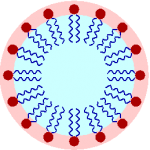
Now researchers from Israel have found a new stable polyanhydride obtained from sebacic acid and ricinoleic acid. The new stable polyanhydride was synthesized with alternating ester anhydride structure that is stable at 25 °C for over 18 months. The copolymer is also stable in chloroform solution and under γ-irradiation.

More

New Castor Oil Based Wood Adhesives

Recent study shows production of wood adhesives from castor oil.

Commonly used wood adhesives were anima (hide) glue, urea-formaldehyde resin adhesives, resorcinol-formaldehyde, phenol-formaldehyde, polyurethane, castor-oil-800067etc.

Now scientists from Iran have conducted an experiment to produce polyester polyols, which is an important compound in polymeric polyurethane adhesives, from castor oil. The polyester polyols were synthesized condensation polymerization of different dicarboxylic acids with castor oil.

Characterization studies were also carried out to determine the shear strength value in various conditions such as cold water, hot water, acid and alkali solutions.

More

New Castor Oil-based Polymeric Surfactants

Recent study has found new castor oil based polymeric surfactants.

Polymeric surfactants are polymeric substances which tend to reduce surface tension of a liquid in which it is dissolved.

Now scientists from China have conducted an experiment to produce castor oil based polymeric surfactants. Dehydrated castor oil was epoxidized using phosphoric acid and acetic acid to produce epoxidized castor oil. Ring opening polymerization surfactantmethod was followed with to produce polymerized epoxidized castor oil (PECO) and hydrolysed PECO (HPECO).
Characterization studies showed that castor oil based polymeric surfactants exhibited high efficiency to reduce the surface tension of water.

Source

New Castor Oil based Copolymers for Surface Coating Applications

Recent study finds castor oil sourced copolymers for surface coating applications.

Scientists from India have performed the experiment where acrylic polyols comprising castor oil derived hydroxy functional acrylic copolymers were synthesized by co-reacting imagesmodified hydroxy functional castor oil with a variety of acrylic monomers. Solution polymerization method was followed in the presence of an inhibitor.

The synthesized resins when cured with suitable amino-resin cross-linkers provided tough, glossy and weather resistant coatings.

Source