Effect of Castor Oil as an Auxiliary Stabilizer in the Production of Flexible Polyurethane Foams

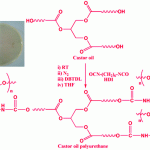
Researchers from Nigeria performed an experiment to castor oil polyurethaneanalyze the effect of castor oil as an auxiliary stabilizer in the production of polyurethane foams.  Castor oil was used as a substitute to silicone oil at different percentages.
The results showed that castor oil could be a best partial substitute for silicone oil at higher densities.

Source

Synthesis of Bio-Castor Oil Polyurethane Flexible Foams and the Influence of Biotic Component on their Performance

Scientists from China conducted an experiment to synthesize bio-castor oil polyurethane flexible foams and study the influence of biotic component on their performance. A series of biobased polyurethane foams were synthesized bCastor oil polyurethaney substituting polyether polyol with castor oil and polyethylene glycol (PEG). The influence of castor oil component on the structure and physical properties of polyurethane foams were studied.

Results showed that the Young’s modulus and compression resilience improved with increased content of castor oil. They also exhibited lower water absorption and higher contact angle with increase in content of castor oil.

Source

Studies on Interfacial Tension and Contact Angle of Synthesized Surfactant and Polymeric from Castor Oil for Enhanced Oil Recovery

Researchers from India performed an experiment to study interfacial tension and contact angle of synthesized surfactant and polymeric from castor oil. The polymeric surfactant was synthesized from pre-synthesized sodium methyl ester sulfonateCastor oil (surfactant) and acrylamide for application in chemical enhanced oil recovery.
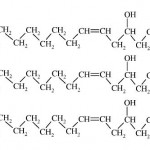
The synthesized surfactant and polymeric surfactant were used to measure interfacial tension between their aqueous phase and crude oil phase. Contact angles of solid-crude oil-surfactant interface were also measured. Results showed that interfacial tension was lower which is effective for oil recovery.

More

Influence of NCO/OH and Transesterified Castor Oil on the Structure and Properties of Polyurethane: Synthesis and Characterization

Scientists conducted an experiment to analyze the influence of isocyanate, hydroxyl groups and transesterified castor oil on the structure and properties of polyurethane. castor oil polyurethane Polyurethane was synthesized using transesterified castor oil and partially Biobased isocyanate with varying concentrations of isocyanate and hydroxyl groups.

The chemical and mechanical properties, thermal stability of polyurethanes were analyzed. Results showed that NCO/OH molar ratio had profound effect on the tensile properties and modulus of polyurethanes.

Source

Biocompatibility and Osteogenesis of the Castor Bean Polymer Doped with Silica (SiO2) or Barium Titanate (BaTiO3) Nanoparticles

Scientists from Brazil conducted an experiment to evaluate the biocompatibility and osteogenesis of castor oil polymer doped with SiO2 or BaTiO3 nanoparCastoroil polymerticles.

Twenty-four rats with bone defect were experimented with castor oil polymer doped with SiO2 or BaTiO3. Euthanasia occurred 30 and 60 days after surgery and the femurs were sent to histological analysis and MEV. Results showed that the implants were biocompatible and allowed for progressive osteogenesis.  Thus, castor oil polymer doped with SiO2 or BaTiO3 remains biocompatible and allows for osteogenesis.

Source

Inter-Vesicle Polymerization Using Non-ionic Oxyethylene Hydrogenated Castor Oil

Scientists from Japan conducted an experiment to analyze the nature and Castor oilcharacteristics of polymerizable vesicles produced by using oxyethylene hydrogenated castor oil.  Polymerized vesicles were produced in aqueous solution. Hydrogen NMR spectroscopy was used to investigate the polymerization process using azobis(isobutyronitrile) as an initiator.

Results showed that the polymerized vesicles were resistant to disruption by polyoxyethylene(10) octylphenyl ether. The degree of resistance depends on vesicle concentration and incubation temperature and this dependence is due to the inter-vesicle polymerization.

Source

Preparation and Properties of Waterborne Bio-based Polyurethane/Siloxane Cross-Linked Films by an in situ Sol–gel Process

Scientists from China prepared waterborne castor oil -based polyurethane –sCastor oililica hybrid materials with chemically bonded polymer matrix and silica nanoparticles.  The formation of the cross-linking structures in the polyurethane system was confirmed by FTIR.

The results showed that the nano-silica in the polyurethane matrix improved both hydrophobicity and thermal stability of the resulting hybrid polyurethane films. Thus this process can help in the design of bio-based hydrophobic waterborne polyurethane films with favourable thermal stability and optical transmittance.

Source

Castor Oil Polyamide Biopolymer – An Emerging Application of Castor Oil – Part II

Biopolymers are an emerging application of castor oil and its derivatives. These biopolymers include castor based polyamides and castor based polyurethanes. (see also: Castor Oil Polyamide Biopolymer – Part I)

The world polyamide market size is over $25 billion.

Some prominent companies working on castor based polyamides and engineering plastics are:

Company Polyamide
Arkema 6,11
BASF 6,10
Du Pont 6,10; 10,10
DSM 4,10
EMS 6,10; 10,10; 10T (PPA)
Evonik 6,10

Castor Based Polymer Induces Bone Formation by Expressing MMP2 genes

The study evaluated the modulation of matrix metalloproteinase-2 (MMP-2) and −9 (MMP-9)  expression in newly formed bone tissue at the interface between implants derived from castor oil (Ricinus communis) polymer and the tibia medullary canal.

Results showed that the castor based polymers  induces bone formation by the expression of MMPs. The MMPs play an important role in tissue remodeling associated with various physiological and pathological processes such as morphogenesis, angiogenesis, tissue repair, cirrhosis, arthritis, and metastasis.

Forty-four rabbits were assigned to either Group 1 (n = 12; control) or Group 2 (n = 30), which had the tibial medullary canals reamed bilaterally and filled with polymer. CT scans showed no space between the material surface and the bone at the implant/bone marrow interface, and the density of the tissues at this interface was similar to the density measured of other regions of the bone. At 90 days post implantation, the interface with the polymer presented a thick layer of newly formed bone tissue rich in osteocytes. This tissue exhibited ongoing maturation at 120 and 150 days post implantation.

Overall, bone remodeling process was accompanied by positive modulation of MMP-2 and low MMP-9 expression. Differently, in control group, the internal surface close to the medullary canal was lined by osteoblasts, followed by a bone tissue zone with few lacunae filled with osteocytes. Maturation of the tissue of the medullary internal surface occurred in the inner region, with the bone being nonlamellar.