Recent study has found the use of castor oil as antistatic and anticorrosive materials.
Antistatic property is defined as the fast dissipation of static electricity (static charge). It is evaluated using two measures – surface resistance and half-life. The lower the surface resistance (Ω), the higher the antistatic property; and the shorter the half-life (s), the higher the antistatic property.
A previous study conducted by scientists from Korea in 2004, has found that waterborne -polyurethane coating materials containing conductive polyaniline blend films showed 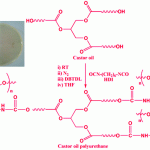 reduced antistatic half-life.
Now, scientists from Korea and India have prepared castor oil-based waterborne polyurethane/polyaniline (COWPU/PAni) conducting polymer blend films. The waterborne polyurethane synthesized from isophorone diisocyanate was reacted with castor oil to form prepolymers. Also, COWPU/PAni hybrid dispersions were synthesized to make different conductive composites.
Characteristic studies showed that COWPU/PAni conducting blend films could be used as antistatic and anticorrosive coating materials.
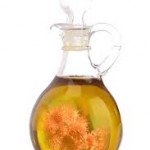 high viscosity. Hence scientists from Singapore have found an alternative method to produce low viscosity biodiesel from castor oil.
 glycosides having antibacterial activity using Koenigs–Knorr glycosylation reaction. On the whole, 28 ricinoleic acid glycosides were developed and their antibacterial activities were analysed. Seven of them were found to show promising wide spectrum antibacterial activity against gram positive bacteria.
 like polycarbonate polyols, polycaprolactone polyols, polybutadiene polyols, and polysulfide polyols have been used to make polyurethane sealants.
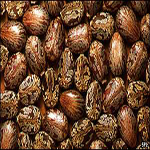 at Hiriyur have developed a disease resistant and high yield variety of castor seed called HCH-6 (Hybrid Castor Hiriyur) which is a fusion of DPC-9 and TMV-6 varieties.
 determine the genetic variability for seed longevity.
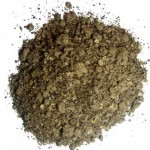 of castor seed meal replacing soybean meal. The experimental setup was completely randomized with five treatments and ten replicates.
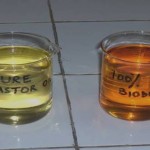 or oil without using extra petrochemical methanol. The new method uses bio refinery setup where bioethanol is used instead of fossil-based methanol to produce biodiesel.