$62.7 million Sebacic Acid Project to come up in Duqm

A first-of-its-kind Sebacic acid production plant is planned to be built in DuqSebacic acidm Special Economic Zone with an investment of $62.7 million and the chairman of the Special Economic Zone Authority at Duqm (SEZAD) and the representatives of Sebacic Acid Oman Company have signed an agreement.

The plant will be spread over 400,000 square meters of land and will be the first-of-its-kind in the Middle East.

Source

Arkema Launches Polyamide Processed from Castor Oil

ArkemaArkema has launched a new biosourced polyamide 6.10 range called Rilan S, partially processed from castor oil. The polyamide has been manufactured at Arkema’s Zhangjiagang facility in China

Rilan S is an alternative to long-chain polyamides and PA6/PA6.6; it closes the gap between long-chain polyamides and PA6/PA6.6. The various Rilan S grades already available find applications in the field of transport, sports and electronics.

Source

Effect of Chlorinated Phosphate Ester Based on Castor Oil on Thermal Degradation of Poly (Vinyl Chloride) Blends and its Flame Retardant Mechanism as Secondary Plasticizer

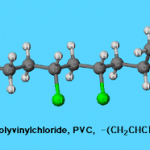
Scientists from China conducted an experiment to analyze the effect of castor oil based chlorinated phosphate ester on thermal degradation of PVC. A novel flame rPVCetardant chlorinated phosphate ester based on castor oil (CPECO) was synthesized. Its chemical structure was characterised with FTIR and NMR.

Application of CPECO as a secondary plasticizer for PVC gained satisfied flame retardancy and substituted for dioctyl phthalate (DOP) partly. Increase in PVC blends was observed. The flame retardant mechanism showed that phosphorus containing generated from the pyrolysis of CPECO   could promote char residual.

More

Preparation and Properties of Waterborne Bio-based Polyurethane/Siloxane Cross-Linked Films by an in situ Sol–gel Process

Scientists from China prepared waterborne castor oil -based polyurethane –sCastor oililica hybrid materials with chemically bonded polymer matrix and silica nanoparticles.  The formation of the cross-linking structures in the polyurethane system was confirmed by FTIR.

The results showed that the nano-silica in the polyurethane matrix improved both hydrophobicity and thermal stability of the resulting hybrid polyurethane films. Thus this process can help in the design of bio-based hydrophobic waterborne polyurethane films with favourable thermal stability and optical transmittance.

Source

Global Castor Oil and Derivatives Market to Reach $1.81 Billion by 2020

Owing to the rapid growth of biodiesel, lubricants and cosmetics industries, the growth of castor oil and derivatives market is expected to reach $1.81 billion by 2020. A strong Castor oil and Castor oil derivativesshift of volatile crude oil prices towards the substitution of conventional fuels by biofuels has also a positive influence on the growth of castor oil market.

Castor wax industry is expected to reach the highest growth rate of CAGR of 5.8% from 2014 to 2020. Also, the growth of personal care industry, particularly in Asia Pacific and Latin America is expected to increase over the next 6 years.

More

Emerging Application of Castor oil in Personal Care Sector

Castor oil and derivatives are widely used in soaps, creams (tretinoin), shampoos, perfumes, lip gels, lipsticks, hair oils, deodorants, lubricants, sunscreens, and other personal care products.

It has been used in skin care products for centuries, and continues to play an important part in soaps and cosmetics.

Cosmetics manufacturers use castor oil and its derivatives in formulating non-comedogenic cosmetics (cosmetics that don’t exacerbate or contribute to acne) and emollients.

The major companies using castor oil for cosmetics are given in the table.

Company Country Products castor derivatives used in Derivative Used
Lavera USA Deodorants, body lotion, sunscreen Zinc ricinoleate and HCO
Avene USA Deodorant Zinc ricinoleate
Jason USA Body lotion and deodorants Zinc ricinoleate
Arkema France Hair care, beauty creams Undecylenic acid
Aveya Beauty USA Hair care products Castor oil basic grades
Worlee Cosmetics Germany Natural exfoliants HCO

The global demand for organic personal care products is expected to reach $13.2 billion by 2018, growing at a CAGR of 9.6 per cent.

Castor today contributes only a small % to this sector, but the potential is much higher.

Applications of Castor oil in Specialty Chemicals and Biofuels Market

Castor Oil for Specialty Chemicals

Specialty chemicals market is a $700 billion + market worldwide, with high profit margins.

Given castor oil unique versatility, there could be a number of niche applications within specialty chemicals, other than the ones already exploited.

More “entrepreneurial” research needs to be undertaken in this direction.

Castor Oil for Biofuels

While there has been a lot of debate about the use of castor oil for biodiesel, we feel that it is not a viable route. Sure, technically castor oil might be suitable to make biodiesel, except perhaps for its high kinematic viscosity, which could even be taken care of during transesterification.

The more important dimensions are the economics and volumes which make castor oil quite unattractive as a feedstock for biodiesel:

  • Economics – Price of biodiesel needs to be in the range $900-$1000 per ton; price of castor oil alone is $1300/T.
  • Volumes – World produces about 20 million T of biodiesel every year; world castor oil production is less than 1 million T!

In fact, we have been generous on the price aspect. If the current downtrend in crude prices continues, biodiesel might have to sell at less than $700 per T. We dont see how castor oil could support such a price.

On volumes, castor is produced in such small quantities, it really is going to make little difference overall to the biodiesel market.

And when especially the same castor oil oil could be sold at a much higher price to end users who would be willing to pay a much higher price for the oil or the derivative, we do not see how castor oil biodiesel could work out on any sizable scale.
Castor Oil Polyurethane Biopolymer – An Emerging Application of Castor Oil – Part I

Biopolymers are an emerging application of castor oil and its derivatives. These biopolymers include castor based polyamides and castor based polyurethanes. (See also Castor Oil Biopolymers – Part II)

Castor Oil Polyurethane

Castor oil is increasingly finding application in the manufacture of polyurethane foams. The polyurethane is produced from polyols based on castor oil.

The world polyurethane market size is over $50 billion.

Features of Castor Oil Based Polyurethane:

Castor oil polyurethane is

  • Superior to PPG (Polypropylene Glycol) or polyester in water and hydrolysis resistance
  • Superior to PPG or polyester in insulation
  • Lower viscosity than polybutadiene or polyester
  • A challenging issue of polyurethane flooring is heat and humidity. The urethane produced from castor oil is stable under high heat and humidity.

Castor Oil Polyamide Biopolymer – An Emerging Application of Castor Oil – Part II

Biopolymers are an emerging application of castor oil and its derivatives. These biopolymers include castor based polyamides and castor based polyurethanes. (see also: Castor Oil Polyamide Biopolymer – Part I)

The world polyamide market size is over $25 billion.

Some prominent companies working on castor based polyamides and engineering plastics are:

Company Polyamide
Arkema 6,11
BASF 6,10
Du Pont 6,10; 10,10
DSM 4,10
EMS 6,10; 10,10; 10T (PPA)
Evonik 6,10

Current Applications of Castor Oil & Derivatives

Castor has one of the most diverse set of applications among all plant oils.

This post reviews and summarises the key current applications of castor oil and derivatives. Another post of mine looks at emerging applications of castor oil derivatives.

The current applications of prominent castor oil derivatives.

Blown Castor Oil Potential replacement for phthalates, used primarily as a plasticizer for lacquers, inks, adhesives, hydraulic fluids and leathers.
Sulfated/Sulfonated Castor Oil Synthetic detergent, used in bath oil recipes along with fragrance or essential oils, or in shampoos, used in agriculture as organic manure
Hydrogenated Castor Oil Used in polishes, cosmetics, electrical capacitors, carbon paper, lubrication, and coatings and greases, use in cosmetics, hair dressing, ointments
Sebacic Acid Sebacic acid and hexamethylene diisocyanate produce Nylon 6-10, used as an intermediate for aromatics, antiseptics and painting materials
Ricinoleic Acid Uses include, coatings, plastics, inks and cosmetics, Ricinoleate soaps have been patented as algaecides for aquaculture systems.
2-Octanol(Capryl alcohol) Main raw material for some esters, used as a solvent, dehydrater and antibubbling agent,  used as fiber oil
Castor Seed Residue, also called Castor Meal Fertilizer and as fuel
12-Hydroxy Stearic Acid (12-HSA) Used in grease manufacture, plastics lubrication.
Dehydrated Castor Oil (DCO) Used to improve the quality of house paints, enamels, caulks, sealants and inks. It is used as primary binder for house paints, enamels, caulk sealant, and making varnishes