Newly Synthesized Bolaamphiphiles from Castor Oil and their Aggregated Morphologies for Potential Use in Drug Delivery

Researchers from Israel performed an experiment to synthesize bolaamphiphiles frombolaamphiphilic cpds castor oil to be used as potential drug delivery systems. Two classes of symmetric and asymmetric bolaamphiphiles with acetyl choline head groups were synthesized and characterized.

Results showed that these compounds self-assembled in aqueous media to form stable cationic nano-sized vesicles which can used as potential drug delivery systems.

Source

Novel Zwitterionic Surfactant Derived from Castor Oil and its Performance Evaluation for Oil Recovery

Researchers from China performed an experiment to prepare a novel zwitterionic surfactant from castor oil. The novel zwitterionic surfactant was prepared uCastor oilsing a high yield route and its performance for oil recovery was analyzed.

Experimental results showed that the biobased surfactant exhibited strong electrolyte tolerance, temperature resistance, and thermo stability, better wetting and foaming performance, which implies that biobased surfactants could be of great potential to replace traditional petroleum based surfactants.

Source

Epoxidation and Polymerization of Acrylated Castor Oil

Scientists from Turkey conducted a study to investigate a new type of bifunctional Castor oilmonomer obtained from castor oil. Castor oil was first reacted with acryloyl chloride to obtain acrylated castor oil. Epoxidized acrylated castor oil obtained after epoxidation reaction was characterized using various techniques.

After characterization, homo and block copolymers were synthesized and evaluated. It was observed that epoxidized acrylated castor oil copolymer showed higher storage modulus and higher thermal stability.

More

Blending and Optimization Study on Improved Low-temperature Properties of Chemically Modified High Free Fatty Acid Castor Oil–methyl esters

Researchers from India conducted an optimization study to improve low-temperature properties of chemically modified high free fatty acid castor oil methyl esters. Castor Castor oiloil fatty acid methyl ester was prepared and epoxidation process was carried out using hydrogen peroxide as oxygen donor and IR-120 as heterogenous acid catalyst.

Response surface methodology was implemented to optimize the epoxidation process. The results showed that epoxide blended with COFAME showed an improved pour point compared with pure epoxide.

Source

Preparation of Functionalized Castor Oil Derivatives with Tunable Physical Properties Using Heterogeneous Acid and Base Catalysts

Scientists from India conducted an experiment to prepare functionalized castor oil derivatives with tunable physical properties by using heterogeneous acid and base catalysts. Epoxidized castor oil (ECO) was used as a raw material to prepCastor oilare the different functionalized castor oil derivatives namely ring-opened glyceryl ricinoleates, epoxy alkyl ricinoleates, and ring-opened alkyl ricinoleates, using two chemical reactions, ring opening and transesterification.

Among several acid catalysts screened, Amberlyst 15 showed maximum conversion for ring opening of ECO with methanol. By using CaAl-layered double hydroxide (LDH) derived oxides as base catalyst, maximum yield of epoxy alkyl ricinoleates were obtained through transesterification of ECO. The physical properties of these derivatives can be used to design tailor-make material for industrial needs.

More

$62.7 million Sebacic Acid Project to come up in Duqm

A first-of-its-kind Sebacic acid production plant is planned to be built in DuqSebacic acidm Special Economic Zone with an investment of $62.7 million and the chairman of the Special Economic Zone Authority at Duqm (SEZAD) and the representatives of Sebacic Acid Oman Company have signed an agreement.

The plant will be spread over 400,000 square meters of land and will be the first-of-its-kind in the Middle East.

Source

Arkema Launches Polyamide Processed from Castor Oil

ArkemaArkema has launched a new biosourced polyamide 6.10 range called Rilan S, partially processed from castor oil. The polyamide has been manufactured at Arkema’s Zhangjiagang facility in China

Rilan S is an alternative to long-chain polyamides and PA6/PA6.6; it closes the gap between long-chain polyamides and PA6/PA6.6. The various Rilan S grades already available find applications in the field of transport, sports and electronics.

Source

Global Castor Oil and Derivatives Market to Reach $1.81 Billion by 2020

Owing to the rapid growth of biodiesel, lubricants and cosmetics industries, the growth of castor oil and derivatives market is expected to reach $1.81 billion by 2020. A strong Castor oil and Castor oil derivativesshift of volatile crude oil prices towards the substitution of conventional fuels by biofuels has also a positive influence on the growth of castor oil market.

Castor wax industry is expected to reach the highest growth rate of CAGR of 5.8% from 2014 to 2020. Also, the growth of personal care industry, particularly in Asia Pacific and Latin America is expected to increase over the next 6 years.

More

Royal DSM Uses Castor Derivatives In Aluminum Windows Manufacture

Royal DSM, a Dutch life sciences and material sciences firm, has used the castor oil for its aluminium windows manufacturing.

Royal DSM says its new EcoPaxx polyamide 410, which has a bio-based content of 70%, can help reduce the environmental footprint of aluminium window profiles. The material, used in insulating profiles, is made from a material derived from the castor plant

According to DSM, EcoPaxx polyamide 410 also offers mechanical advantages over other engineering plastics, including a high melting point of 250°C, good hydrolysis and chemical resistance, and lower moisture absorption than PA66.

Read More: http://www.prw.com/subscriber/headlines2.html?cat=1&id=3355

Get to know more about related derivatives:

Some interesting links

Building Energy Analytics

Some Innovative & Unique Solar Power

Castor Oil Derivatives for Agrochemicals

Etocas and Croduret (trade names) are vegetable-derived nonionic surfactants which find widespread use in agrochemicals as general emulsifiers and solubilisers. They are of particular value as biodegradable, sustainable alternatives to nonyl phenol ethoxylates. Etocas and Croduret , both   marketed by Croda,  are ethoxylated castor oil and ethoxylated hydrogenated castor oil respectively.
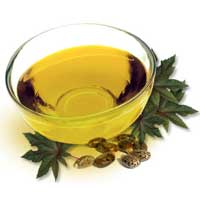
The emulsion characteristics judged were

1. Ease of dispersion of the surfactant/solvent mixture in water at 25ºC

2. The particle size of the resulting emulsion

Lower molar ethoxylates of castor oil are used as dispersing agents for oil based systems. They  are generally considered to present no special hazards. However, as with other nonionic surface active agents of this type, they may be irritating to the eyes as supplied.

More from here: http://www.chservice.ru/download/Etocas%20and%20Croduret.pdf