Stable Polyanhydride Synthesized from Sebacic Acid & Ricinoleic Acid

Polyanhydrides are a class of biodegradable polymers that are usually unstable and prone to hydrolytic degradation and depolymerisation. They need to be stored at -20°C, Polyanhydridepacked under inert atmosphere until use.

Now researchers from Israel have found a new stable polyanhydride obtained from sebacic acid and ricinoleic acid. The new stable polyanhydride was synthesized with alternating ester anhydride structure that is stable at 25 °C for over 18 months. The copolymer is also stable in chloroform solution and under γ-irradiation.

More

New Method for Production of Castor Oil Biodiesel

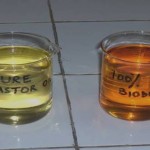
Researchers have performed a new method to produce biodiesel from castor oil. Transesterification of castor oil was performed using coconut oil as a co-reactant castor oil biodieseland MgO/SiO2 as heterogenous base catalyst. The catalyst was prepared from rice husk silica and magnesium nitrate by sol-gel method.

Characteristic studies found that the use of coconut oil as a co-reactant significantly increased the conversion of castor oil to biodiesel.

Source

New Castor Oil-based Polymeric Surfactants

Recent study has found new castor oil based polymeric surfactants.

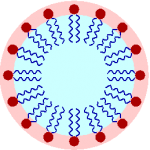
Polymeric surfactants are polymeric substances which tend to reduce surface tension of a liquid in which it is dissolved.

Now scientists from China have conducted an experiment to produce castor oil based polymeric surfactants. Dehydrated castor oil was epoxidized using phosphoric acid and acetic acid to produce epoxidized castor oil. Ring opening polymerization surfactantmethod was followed with to produce polymerized epoxidized castor oil (PECO) and hydrolysed PECO (HPECO).

Characterization studies showed that castor oil based polymeric surfactants exhibited high efficiency to reduce the surface tension of water.

Source

New Castor Oil based Copolymers for Surface Coating Applications

Recent study finds castor oil sourced copolymers for surface coating applications.

Scientists from India have performed the experiment where acrylic polyols comprising castor oil derived hydroxy functional acrylic copolymers were synthesized by co-reacting imagesmodified hydroxy functional castor oil with a variety of acrylic monomers. Solution polymerization method was followed in the presence of an inhibitor.

The synthesized resins when cured with suitable amino-resin cross-linkers provided tough, glossy and weather resistant coatings.

Source

New Castor Oil based Antistatic and Anticorrosive Materials

Recent study has found the use of castor oil as antistatic and anticorrosive materials.

Antistatic property is defined as the fast dissipation of static electricity (static charge). It is evaluated using two measures – surface resistance and half-life. The lower the surface resistance (Ω), the higher the antistatic property; and the shorter the half-life (s), the higher the antistatic property.

A previous study conducted by scientists from Korea in 2004, has found that waterborne -polyurethane coating materials containing conductive polyaniline blend films showed castor oil polyurethanereduced antistatic half-life.

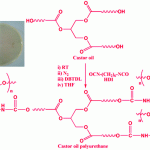
Now, scientists from Korea and India have prepared castor oil-based waterborne polyurethane/polyaniline (COWPU/PAni) conducting polymer blend films. The waterborne polyurethane synthesized from isophorone diisocyanate was reacted with castor oil to form prepolymers. Also, COWPU/PAni hybrid dispersions were synthesized to make different conductive composites.

Characteristic studies showed that COWPU/PAni conducting blend films could be used as antistatic and anticorrosive coating materials.

Source

New Catalyst for Castor Oil Biodiesel Production

Recent study finds ferromagnetic zinc oxide nanocomposite as a suitable heterogeneous catalyst for biodiesel production from castor oil.

The conventional method to produce biodiesel is basic transesterification using a homogeneous catalyst. But this process requires steps of neutralization and washing of the catalyst which increase biodiesel cost.castor oil biodiesel

Some heterogeneous and lipase catalysts are being developed to fight against some of these drawbacks.

Now scientists from India have performed an experiment to synthesise biodiesel from castor oil using ferromagnetic zinc oxide nanocomposite as heterogenous catalyst.

Results showed that ferromagnetic zinc oxide nanocomposite could help to achieve a biodiesel yield of 91% under milder reaction conditions.

Source

New Improved Castor Oil Fatliquoring Agent

Castor oil in water emulsions, also known as fatliquors are used for lubrication of tanned leather fibres to get softness and improve strength properties. Fatliquoring agents are usually obtained by chemical modification.

Now scientists have performed an experiment using nano-TiO2 as emulsifying agent. imagesThe fatliquoring agent based on castor oil was prepared using nano-TiO2 as emulsifying agent by mechanical mixing. Thus castor oil/nano-TiO2 composite fatliquoring agent (CTF) was obtained via Pickering emulsion method.

Pickering emulsion method is the process of preparing emulsion that is stabilized by solid particles which adsorb onto the interface between the two phases.

Results showed that the addition of nano-TiO2 stabilized the emulsion and the application of emulsion in the leather fatliquoring process of goatskin garment improved the physical and mechanical properties of leather. Also, CTF was biodegradable compared to chemically modified castor oil fatliquoring agent.

More

New Medicated Soap from Castor

Recent study has found the production of medicated soap from castor oil.

Medicated soaps are those used for bathing, and contains additives that helps kill germs and other microorganisms. They can also have other functions like skin toning and age defying effects. Generally all types of soaps are prepared using caustic soda.

Now scientists from Nigeria have performed an experiment to produce medicated soap castor oilfrom castor oil extract. Castor oil was extracted via soxhlet extractor and the characterization studies were carried out. It was found that the acid value and saponification value of the oil were between the ranges of values specified by ASTM.

The soap produced gave a pH of 8.9 and the antibacterial activity of the soap on the bacterial isolate Staphylococcus aureus showed a greater inhibition zone, thus concluding that a highly effective soap can be produced from castor oil.

Source

New Source of Biodiesel with Less Viscosity from Castor Oil

Recent study has found a new source of biodiesel from castor oil which has less viscosity than the original castor oil.

Castor oil cannot be used as such for biodiesel production due to its castor oilhigh viscosity.  Hence scientists from Singapore have found an alternative method to produce low viscosity biodiesel from castor oil.

By chemical modification of ricinolein in castor oil and methyl Ricinoleate, new products called ketone-containing glycerides were obtained. These ketone containing triglycerides were used for the production of biodiesel.

The biodiesel obtained by this method was found to have low viscosity.

Thus, vehicles can now run with a fuel which has less viscosity.

Source

New Antibacterial Castor Oil Derivative – from Ricinoleic Acid

Here’s an interesting derivative possibility of an antibacterial product from ricinoleic acid, a derivative of castor oil.

Contamination is a big issue in any environment. It affects each and every stage in all the processes we do from manufacturing a product to its maintenance (shelf life). To control contamination, a suitable compound with a high antibacterial activity is to be added in an ongoing process.

A well-known example of compounds with antibacterial activity are naturally occurring phenolic compounds.

Now scientists from India have developed 7 novel ricinoleic acid ricinoleic acidglycosides having antibacterial activity using Koenigs–Knorr glycosylation reaction. On the whole, 28 ricinoleic acid glycosides were developed and their antibacterial activities were analysed. Seven of them were found to show promising wide spectrum antibacterial activity against gram positive bacteria.
Among the 7 compounds, two compounds namely mannopyranosyl- and the arabinofuranosyl derivatives were found to be effective against various non-clinical/clinical, overexpressed/resistant strains of Staphylococcus aureus and other gram positive bacteria such as Bacillus subtilis and Micrococcus luteus. It was found that the presence of sugar and its structure and the methyl ester protection of the carboxylic moiety of ricinoleic acid are responsible for these compounds to be bioactive.

Now industries looking for other potential compounds with antibacterial activity could go for these ricinoleic acid glycosides.

Wish to know more about Ricinoleic Acid – see here. Or other castor derivatives – see here.

Source