New Method for Production of Castor Oil Biodiesel

Researchers have performed a new method to produce biodiesel from castor oil. Transesterification of castor oil was performed using coconut oil as a co-reactant castor oil biodieseland MgO/SiO2 as heterogenous base catalyst. The catalyst was prepared from rice husk silica and magnesium nitrate by sol-gel method.
Characteristic studies found that the use of coconut oil as a co-reactant significantly increased the conversion of castor oil to biodiesel.

Source

New Castor Oil-based Polymeric Surfactants

Recent study has found new castor oil based polymeric surfactants.

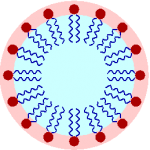
Polymeric surfactants are polymeric substances which tend to reduce surface tension of a liquid in which it is dissolved.

Now scientists from China have conducted an experiment to produce castor oil based polymeric surfactants. Dehydrated castor oil was epoxidized using phosphoric acid and acetic acid to produce epoxidized castor oil. Ring opening polymerization surfactantmethod was followed with to produce polymerized epoxidized castor oil (PECO) and hydrolysed PECO (HPECO).
Characterization studies showed that castor oil based polymeric surfactants exhibited high efficiency to reduce the surface tension of water.

Source

New Castor Oil based Antistatic and Anticorrosive Materials

Recent study has found the use of castor oil as antistatic and anticorrosive materials.

Antistatic property is defined as the fast dissipation of static electricity (static charge). It is evaluated using two measures – surface resistance and half-life. The lower the surface resistance (Ω), the higher the antistatic property; and the shorter the half-life (s), the higher the antistatic property.

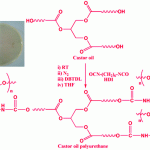
A previous study conducted by scientists from Korea in 2004, has found that waterborne -polyurethane coating materials containing conductive polyaniline blend films showed castor oil polyurethanereduced antistatic half-life.

Now, scientists from Korea and India have prepared castor oil-based waterborne polyurethane/polyaniline (COWPU/PAni) conducting polymer blend films. The waterborne polyurethane synthesized from isophorone diisocyanate was reacted with castor oil to form prepolymers. Also, COWPU/PAni hybrid dispersions were synthesized to make different conductive composites.

Characteristic studies showed that COWPU/PAni conducting blend films could be used as antistatic and anticorrosive coating materials.

Source

New Catalyst for Castor Oil Biodiesel Production

Recent study finds ferromagnetic zinc oxide nanocomposite as a suitable heterogeneous catalyst for biodiesel production from castor oil.

The conventional method to produce biodiesel is basic transesterification using a homogeneous catalyst. But this process requires steps of neutralization and washing of the catalyst which increase biodiesel cost.castor oil biodiesel

Some heterogeneous and lipase catalysts are being developed to fight against some of these drawbacks.

Now scientists from India have performed an experiment to synthesise biodiesel from castor oil using ferromagnetic zinc oxide nanocomposite as heterogenous catalyst.

Results showed that ferromagnetic zinc oxide nanocomposite could help to achieve a biodiesel yield of 91% under milder reaction conditions.

Source

New Improved Castor Oil Fatliquoring Agent

Castor oil in water emulsions, also known as fatliquors are used for lubrication of tanned leather fibres to get softness and improve strength properties. Fatliquoring agents are usually obtained by chemical modification.

Now scientists have performed an experiment using nano-TiO2 as emulsifying agent. imagesThe fatliquoring agent based on castor oil was prepared using nano-TiO2 as emulsifying agent by mechanical mixing. Thus castor oil/nano-TiO2 composite fatliquoring agent (CTF) was obtained via Pickering emulsion method.
Pickering emulsion method is the process of preparing emulsion that is stabilized by solid particles which adsorb onto the interface between the two phases.

Results showed that the addition of nano-TiO2 stabilized the emulsion and the application of emulsion in the leather fatliquoring process of goatskin garment improved the physical and mechanical properties of leather. Also, CTF was biodegradable compared to chemically modified castor oil fatliquoring agent.

More

New Medicated Soap from Castor

Recent study has found the production of medicated soap from castor oil.

Medicated soaps are those used for bathing, and contains additives that helps kill germs and other microorganisms. They can also have other functions like skin toning and age defying effects. Generally all types of soaps are prepared using caustic soda.

Now scientists from Nigeria have performed an experiment to produce medicated soap castor oilfrom castor oil extract. Castor oil was extracted via soxhlet extractor and the characterization studies were carried out. It was found that the acid value and saponification value of the oil were between the ranges of values specified by ASTM.

The soap produced gave a pH of 8.9 and the antibacterial activity of the soap on the bacterial isolate Staphylococcus aureus showed a greater inhibition zone, thus concluding that a highly effective soap can be produced from castor oil.

Source

New Source of Biodiesel with Less Viscosity from Castor Oil

Recent study has found a new source of biodiesel from castor oil which has less viscosity than the original castor oil.

Castor oil cannot be used as such for biodiesel production due to its castor oilhigh viscosity.  Hence scientists from Singapore have found an alternative method to produce low viscosity biodiesel from castor oil.

By chemical modification of ricinolein in castor oil and methyl Ricinoleate, new products called ketone-containing glycerides were obtained. These ketone containing triglycerides were used for the production of biodiesel.

The biodiesel obtained by this method was found to have low viscosity.

Thus, vehicles can now run with a fuel which has less viscosity.

Source

New Antibacterial Castor Oil Derivative – from Ricinoleic Acid

Here’s an interesting derivative possibility of an antibacterial product from ricinoleic acid, a derivative of castor oil.

Contamination is a big issue in any environment. It affects each and every stage in all the processes we do from manufacturing a product to its maintenance (shelf life). To control contamination, a suitable compound with a high antibacterial activity is to be added in an ongoing process.

A well-known example of compounds with antibacterial activity are naturally occurring phenolic compounds.

Now scientists from India have developed 7 novel ricinoleic acid ricinoleic acidglycosides having antibacterial activity using Koenigs–Knorr glycosylation reaction. On the whole, 28 ricinoleic acid glycosides were developed and their antibacterial activities were analysed. Seven of them were found to show promising wide spectrum antibacterial activity against gram positive bacteria.

Among the 7 compounds, two compounds namely mannopyranosyl- and the arabinofuranosyl derivatives were found to be effective against various non-clinical/clinical, overexpressed/resistant strains of Staphylococcus aureus and other gram positive bacteria such as Bacillus subtilis and Micrococcus luteus. It was found that the presence of sugar and its structure and the methyl ester protection of the carboxylic moiety of ricinoleic acid are responsible for these compounds to be bioactive.

Now industries looking for other potential compounds with antibacterial activity could go for these ricinoleic acid glycosides.

Wish to know more about Ricinoleic Acid – see here. Or other castor derivatives – see here.

Source

New Enhanced Neuroprotective Properties of Undecylenic Acid

Here is an interesting article on the enhanced neuroprotective effects of undecylenic acid.

Undecylenic acid, a synthetic unsaturated fatty acid obtained from castor oil is a well-known potent antifungal agent. In 2012, scientists from Korea found that undecylenic acid has the ability to inhibit µ-Calpain activity, a factor responsible for neurological disorders like Alzheimer’s disease.  This showed the neuroprotective effects of Undecylenic acidundecylenic acid.

Now scientists from Poland have done an experiment to improve the efficiency of neuroprotective effects of undecylenic acid by targeting it using polyelectrolyte coated nanocapsules. Core shell nanocapsules were prepared using nanoemulsification and the layer by layer technique. The average size of nanocapsules was around 80nm and the concentration was 2.5×10¹⁰ particles/ml. The nanocapsules were coated with either polycation or polyanion layers.

Biocompatibility of the synthesized nanocarriers was evaluated in SH-SY5Y human neuroblastoma cell line using cell viability/toxicity assays.

Results showed that nanocapsules coated with PLL and PGA were non-toxic to the human neuroblastoma cell line, thereby showing its potential to be used as a carrier of undecylenic acid.  Further research showed that nanoencapsulated form of undecylenic acid was biocompatible and more effective against staurosporine-induced damage in lower concentrations than those of the same drug added directly to the culture medium.

This shows that undecylenic acid could be more effective in nanoencapsulated form against neurological disorders.

Wish to know more about undecylenic acid – see here

Source

New Disease Resistant Castor Seed to Yield 1800 Kg / hectare

Castor-Oil-Seeds2Highlights

  • The new HCH-6 seeds have been developed by scientists at UAHS, Shivammoga
  • Yield in the case of traditional varieties said to be declining by the year owing to disease
  • Farm trial of new varieties have been completed and the hybrid castor seeds could yield up to 30% higher output
  • They are awaiting official approval for release

Scientists at the University of Agricultural and Horticultural Sciences (UAHS), Shivamogga (Karnataka), have developed disease-resistant varieties of castor seeds.

Castor seeds are widely cultivated in dry regions of Chitradurga, Davangere and Tumakuru districts. However, the yield of castor seed has been waning owing to fusarium wilt and white fly infection.

Scientists at zonal agricultural and horticultural research station of the university at Hiriyur have developed a disease-resistant and high-yield variety of castor seed named HCH (Hybrid Castor Hiriyur)-6, which is a fusion of DPC-9 and TMV-6 varieties. If cultivated as a solo crop, the yield of HCH-6 variety is said to be around 18 quintals a hectare of land, while it was around 13-14 quintals a ha in other existing varieties.

(A quintal equals 100 Kg)

As part of the farm trial, Lakshmanappa, a farmer from Holalkere in Chitradurga district, who had cultivated HCH-6 variety of castor in his land, said that the yield had increased by around 22 per cent and the plants were free from wilt infection.P. Narayanaswamy, Director of Research, UAHS, Shivamogga, said that KPR-1 paddy and HCH-6 castor seeds would be released after getting approval from the State-level Variety Release Committee and the Central Sub-committee on Crop Standards, Notification and Release of Varieties. The seeds of both the varieties would be released by June, 2016, he said.

If indeed the castor seed yields could be increased to 1.8 tons/hectare, this could be a big boost to farmers, as the country’s average is hovering only about 1.3-1.4 T/hectare as mentioned earlier. And with the castor seeds seeing an overall upswing in prices in the past few years and hovering at about Rs 40/Kg (though 2015 saw slightly lower prices than 2014), such increases in yields could result in many more farmers taking up castor cultivation.

Source: The Hindu